Sodium
The most misunderstood mineral. Salt isn't the villain—it's essential for life. The real problem is too much processed sodium and not enough potassium.
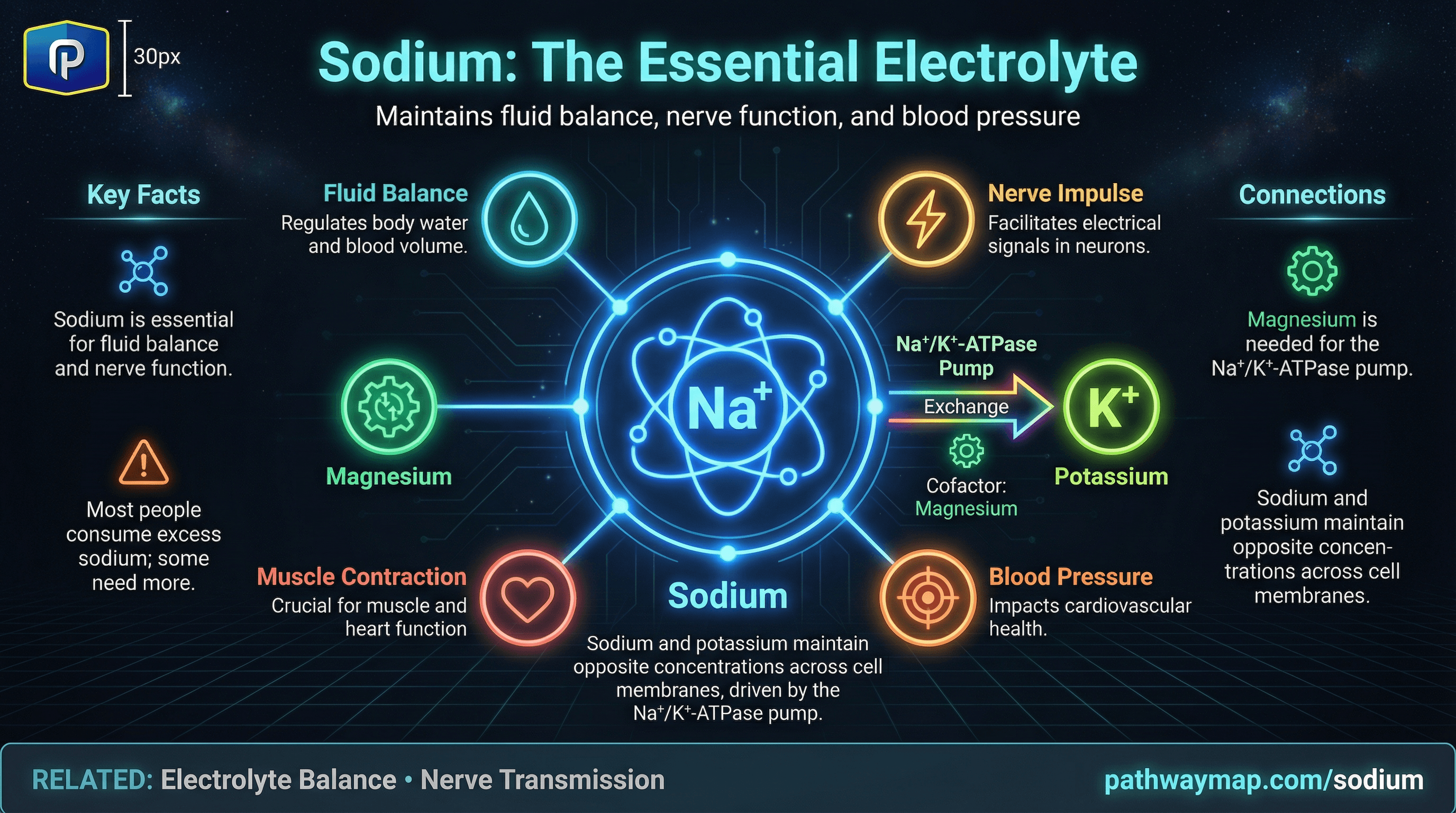
What Sodium Does
Nerve Transmission
Sodium channels enable nerve impulses. Without it, neurons can't fire.
Muscle Contraction
Required for muscles to contract, including heart muscle.
Fluid Balance
Controls water distribution between cells and blood. Maintains blood volume.
Nutrient Transport
Sodium-dependent transporters move glucose and amino acids into cells.
pH Balance
Helps regulate acid-base balance in the body.
Stomach Acid
Chloride from salt is needed to make HCl (stomach acid).
The Real Problem: Ratio, Not Amount
Ancestral Diet
- • Potassium to sodium ratio: 16:1
- • Sodium: ~500-1000mg/day
- • Potassium: 8000-11000mg/day
- • Salt was rare and valued
Modern Diet
- • Potassium to sodium ratio: 1:3
- • Sodium: 3400mg/day average
- • Potassium: 2300mg/day average
- • Completely inverted from our design
The solution isn't just eating less salt—it's eating more potassium-rich foods while reducing processed food sodium. The ratio matters more than the absolute amount.
Not All Salt Is Equal
Table Salt
- • Heavily processed
- • Minerals stripped out
- • Anti-caking agents added
- • Often contains dextrose
- • Pure sodium chloride
Sea Salt
- • Minimally processed
- • Contains trace minerals
- • May have microplastics
- • Quality varies widely
- • Better than table salt
Celtic/Himalayan
- • Contains 80+ minerals
- • Unrefined
- • Lower sodium content
- • Better mineral profile
- • More expensive
⚠️ The Dangers of Too Little Sodium
Aggressive salt restriction can be dangerous, especially for certain groups. Hyponatremia (low sodium) can be life-threatening.
Symptoms of Low Sodium
- • Headache
- • Fatigue
- • Nausea
- • Muscle cramps
- • Confusion
- • Dizziness
- • Seizures (severe)
Who Needs More Sodium
- • Athletes and heavy sweaters
- • Low-carb/keto dieters
- • Adrenal fatigue (low aldosterone)
- • POTS patients
- • Hot climate dwellers
- • Those with salt cravings
✅ Smart Salt Strategy
Cut Processed Foods
75% of sodium comes from processed foods—not the salt shaker.
Use Quality Salt
Switch to unrefined sea salt, Celtic, or Himalayan for trace minerals.
Increase Potassium
Focus on the ratio. Eat potassium-rich foods: avocado, potato, leafy greens.
Salt to Taste
If eating whole foods, salting to taste is usually fine. Trust your cravings.
Consider Context
Athletes, keto dieters, adrenal issues may need more sodium, not less.
Test If Unsure
Blood sodium is tightly regulated. Check if you have symptoms.
Metabolic Connections

Potassium
Sodium and potassium must be balanced—modern diets have it backwards

Adrenal Health
Aldosterone regulates sodium retention

Magnesium
High sodium increases magnesium excretion

Blood Pressure
Excess sodium raises blood pressure in salt-sensitive people

Kidneys
Where sodium balance is regulated

Hydration
Sodium is key to cellular hydration