Succinate
Krebs cycle intermediate and electron donor to Complex II. Also acts as a signaling molecule in inflammation and hypoxia.
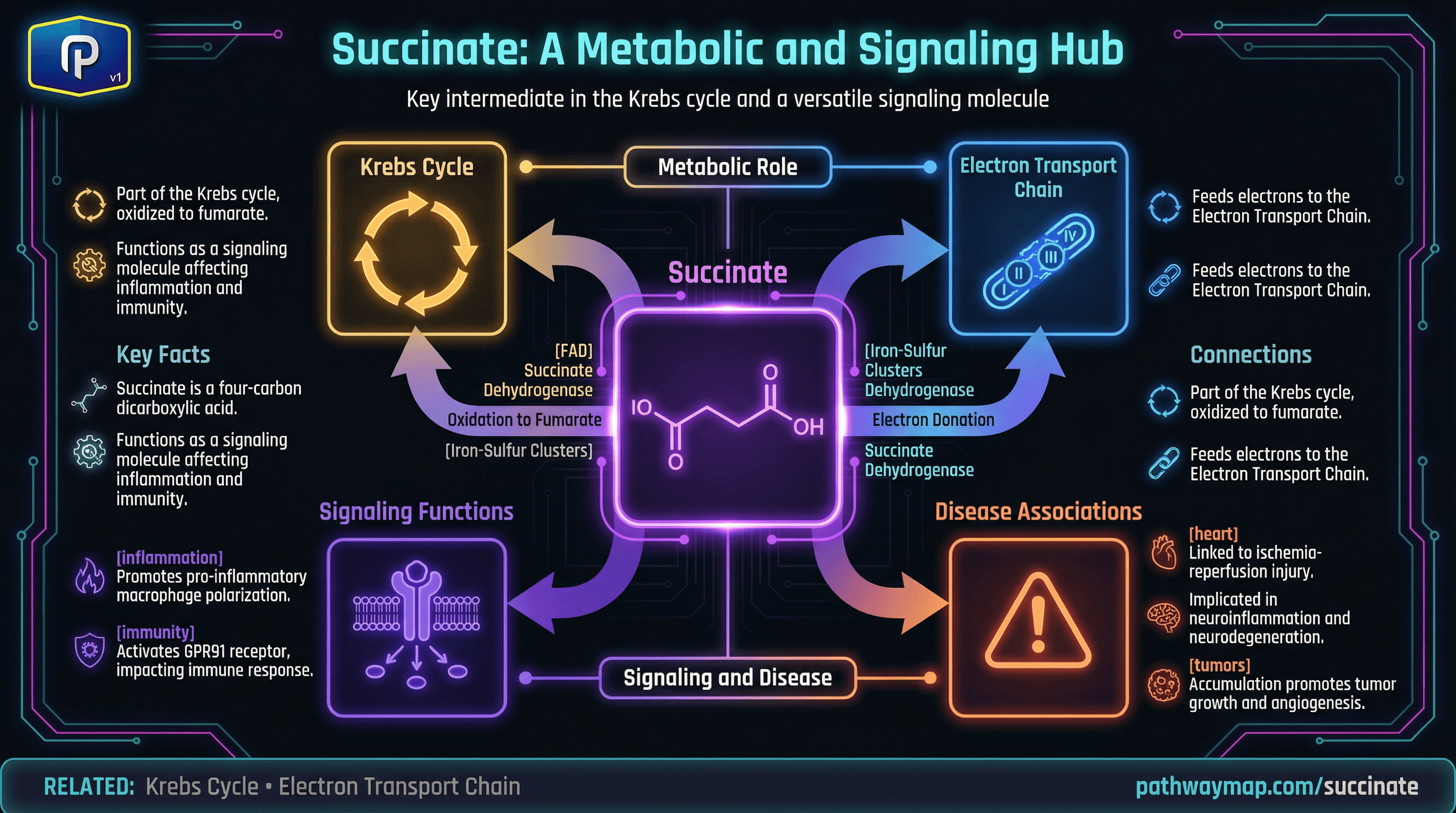
Succinate is a four-carbon dicarboxylic acid and a key intermediate in the Krebs (citric acid) cycle. Beyond its metabolic role, succinate functions as a signaling molecule with effects on inflammation, immunity, and gene expression. Krebs cycle role: Succinate is formed from succinyl-CoA (via succinyl-CoA synthetase, generating GTP) and is oxidized to fumarate by succinate dehydrogenase (SDH, also known as Complex II of the electron transport chain).
This reaction directly feeds electrons to the ETC via FADH2.
Complex II (SDH): Succinate dehydrogenase is unique in being both a Krebs cycle enzyme and an ETC complex. It contains FAD, iron-sulfur clusters, and ubiquinone binding sites. SDH mutations are associated with paraganglioma, pheochromocytoma, and certain cancers.
Signaling functions: Succinate accumulates when SDH is inhibited or during hypoxia/inflammation. It acts as a signal: Stabilizes HIF-1α (hypoxia response), Activates GPR91 (succinate receptor) - induces inflammation, blood pressure regulation, Promotes inflammatory cytokine production (IL-1β), and Involved in trained immunity.
Succinate in disease: Elevated succinate is found in inflammation, ischemia-reperfusion injury, and certain cancers. It contributes to reactive oxygen species generation through reverse electron transport. Succinate and microbiome: Gut bacteria produce and consume succinate.
Elevated intestinal succinate is associated with dysbiosis and may contribute to gut inflammation. Metabolic considerations: Proper SDH function requires iron and riboflavin (for FAD). Succinate accumulation indicates mitochondrial dysfunction or hypoxia.
Metabolic Connections
Succinate connects to 3 other pathways.
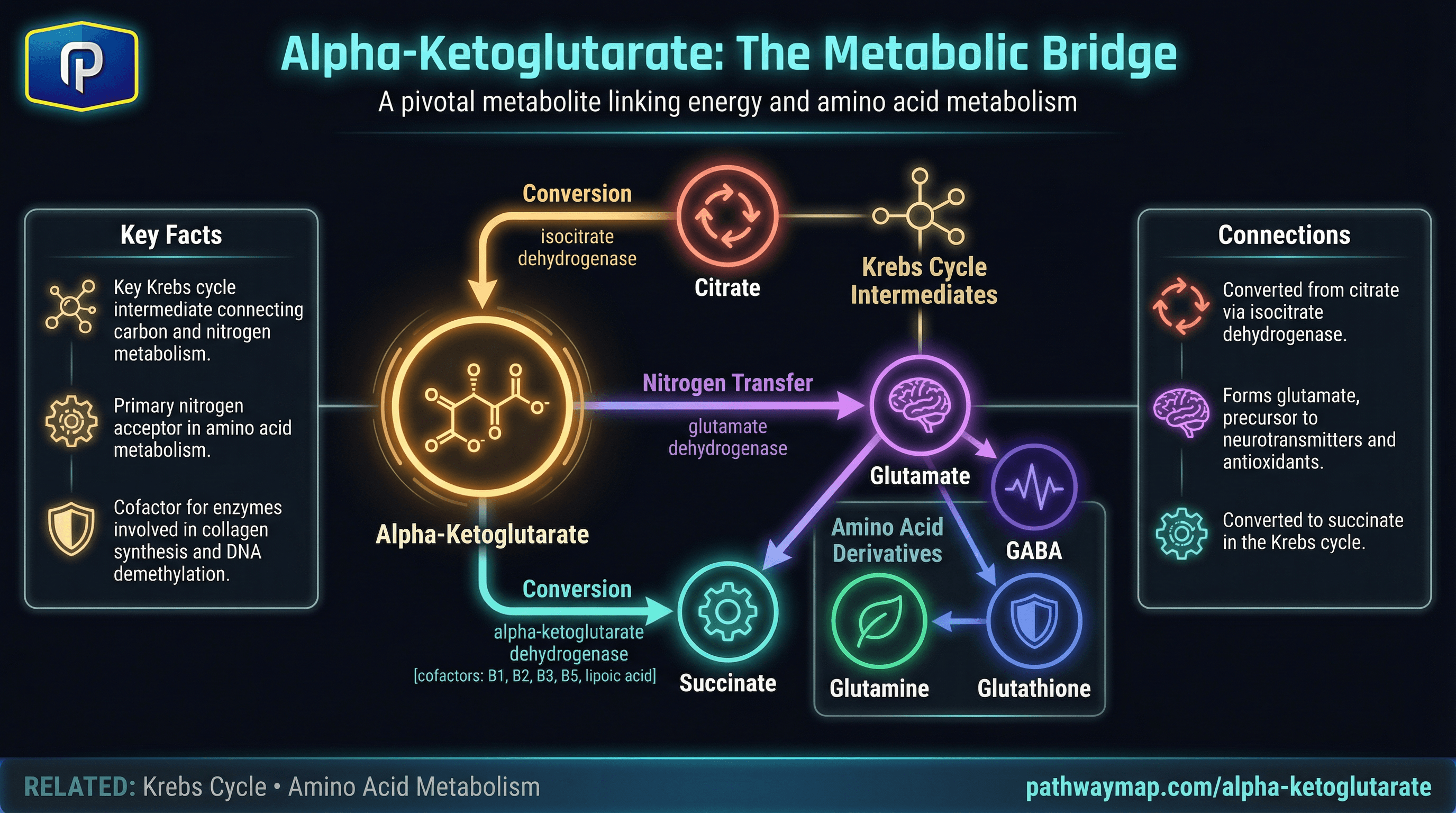
Metabolic Cycles

Electron Transport Chain
Succinate is oxidized by Complex II (succinate dehydrogenase) feeding electrons to the ETC
Mitochondrial system that produces most cellular ATP through oxidative phosphorylation. Requires CoQ10, iron, and B vitamins.
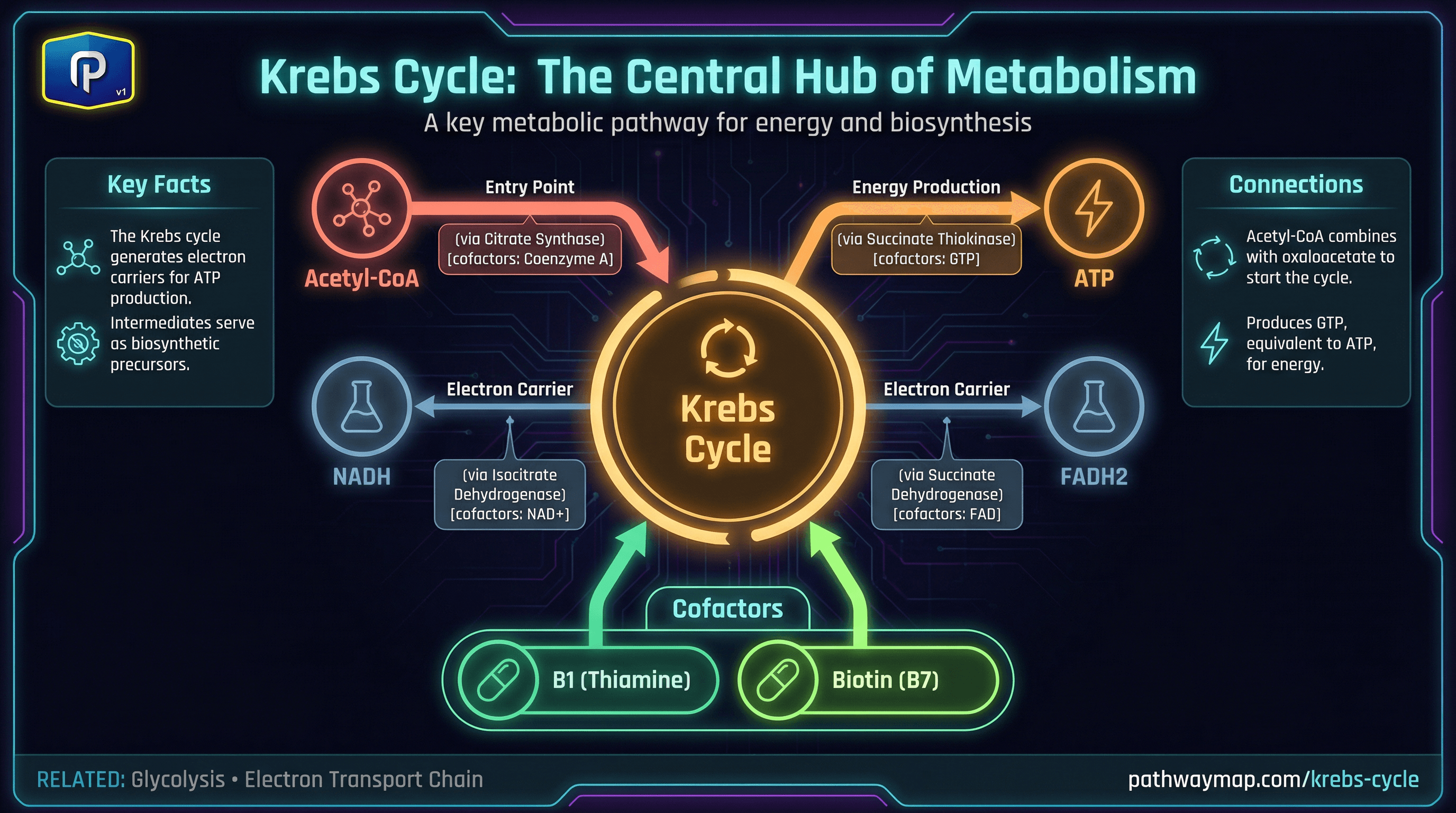
Krebs Cycle
Succinate is a Krebs cycle intermediate, oxidized to fumarate by Complex II
Central metabolic pathway (citric acid cycle) that generates electron carriers for ATP production and biosynthetic precursors.