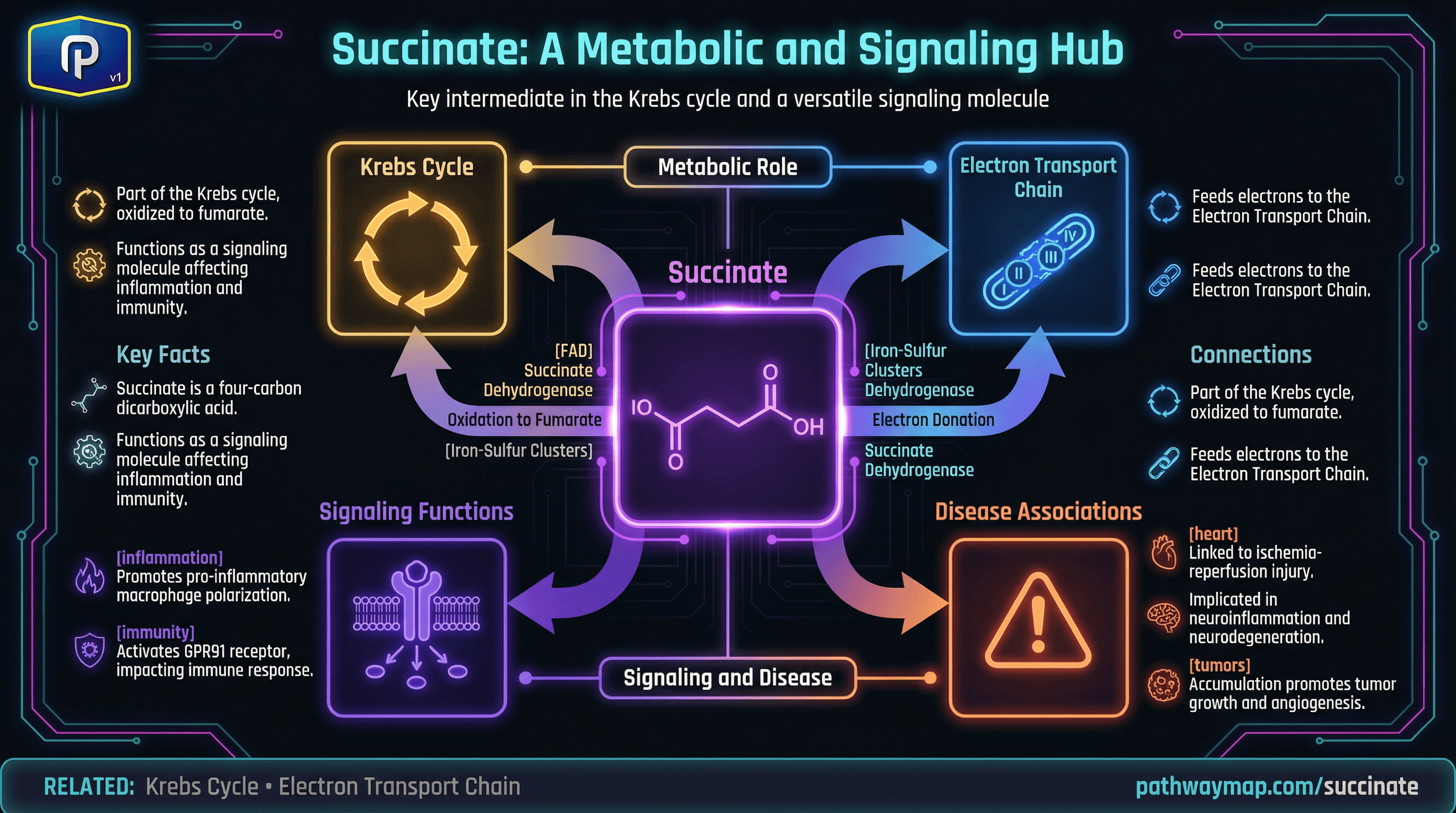
Electron Transport Chain
Mitochondrial system that produces most cellular ATP through oxidative phosphorylation. Requires CoQ10, iron, and B vitamins.

The electron transport chain (ETC) is a series of protein complexes in the inner mitochondrial membrane that transfers electrons from NADH and FADH2 to oxygen, generating a proton gradient that drives ATP synthesis. Complexes: Complex I (NADH dehydrogenase) - accepts electrons from NADH, contains iron-sulfur clusters, pumps protons.
Complex II (succinate dehydrogenase) - accepts electrons from FADH2/succinate, contains FAD and iron-sulfur clusters, doesn't pump protons. Complex III (cytochrome bc1) - transfers electrons to cytochrome c, pumps protons, contains heme iron. Complex IV (cytochrome c oxidase) - transfers electrons to oxygen (forming water), pumps protons, contains copper and heme iron.
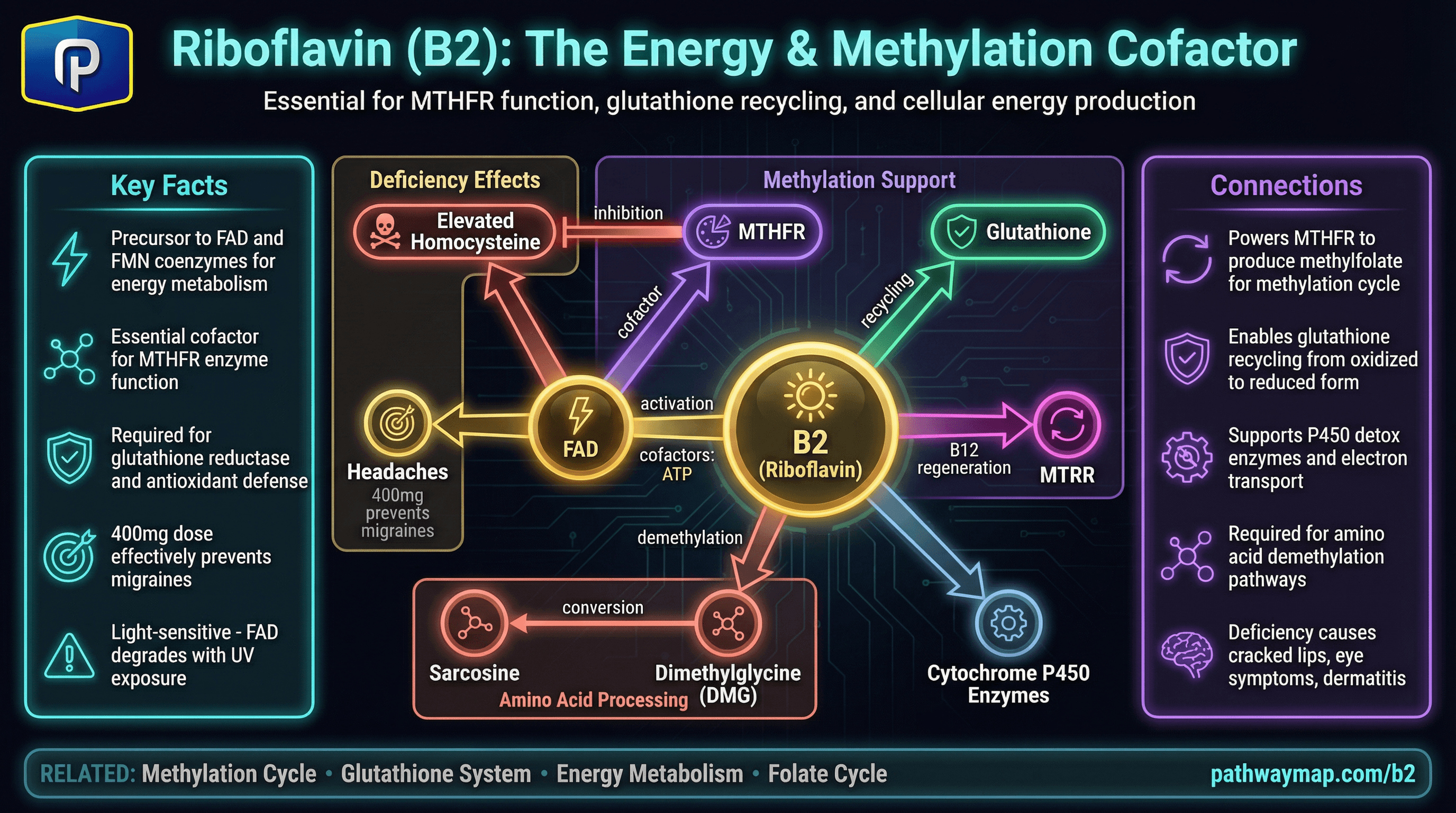
ATP synthase (Complex V) - uses proton gradient to synthesize ATP from ADP + Pi. CoQ10 shuttles electrons from Complex I and II to Complex III. Cytochrome c shuttles electrons from Complex III to Complex IV. Nutrient requirements: CoQ10, Iron (in cytochromes and iron-sulfur clusters), Copper (Complex IV), Riboflavin/B2 (for FAD in Complex II), and adequate NADH/FADH2 from upstream metabolism.
ETC dysfunction: Causes reduced ATP production, increased reactive oxygen species (ROS), and is implicated in aging, neurodegeneration, and mitochondrial diseases. Supporting ETC function with CoQ10, B vitamins, and antioxidants may help.
Metabolic Connections
Electron Transport Chain connects to 11 other pathways.
Cofactors

ATP
The ETC generates the proton gradient that drives ATP synthesis by ATP synthase
Adenosine triphosphate - universal energy currency of cells. Requires magnesium for biological activity.

CoQ10
CoQ10 shuttles electrons from Complex I and II to Complex III in the ETC
Ubiquinone - essential electron carrier in mitochondrial energy production. Also a powerful lipid-soluble antioxidant.
CoQ10
CoQ10 shuttles electrons between Complex I/II and Complex III in the ETC
Ubiquinone - essential electron carrier in mitochondrial energy production. Also a powerful lipid-soluble antioxidant.

FAD (Flavin Adenine Dinucleotide)
FADH2 donates electrons to Complex II of the electron transport chain
Coenzyme derived from riboflavin (B2); electron carrier in redox reactions; required by many dehydrogenases.

NAD+
NADH donates electrons to Complex I of the ETC
Nicotinamide adenine dinucleotide - essential coenzyme for energy metabolism, DNA repair, and sirtuin activation.
NAD+
NADH from Krebs cycle feeds electrons into the electron transport chain
Nicotinamide adenine dinucleotide - essential coenzyme for energy metabolism, DNA repair, and sirtuin activation.
Minerals
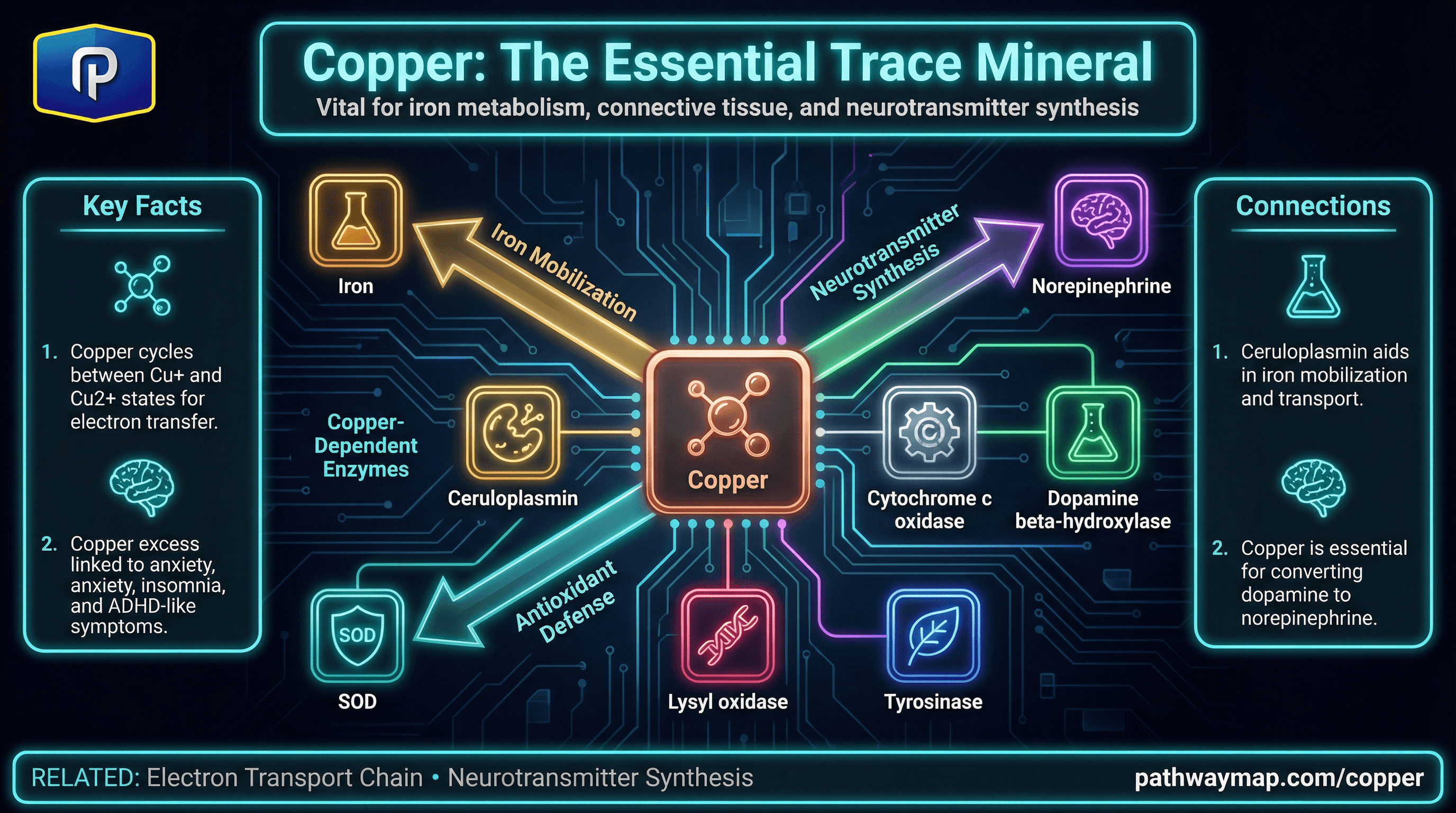
Copper
Copper in Complex IV (cytochrome c oxidase) transfers electrons to oxygen
Essential trace mineral for iron metabolism, connective tissue formation, and neurotransmitter synthesis. Must be balanced with zinc.
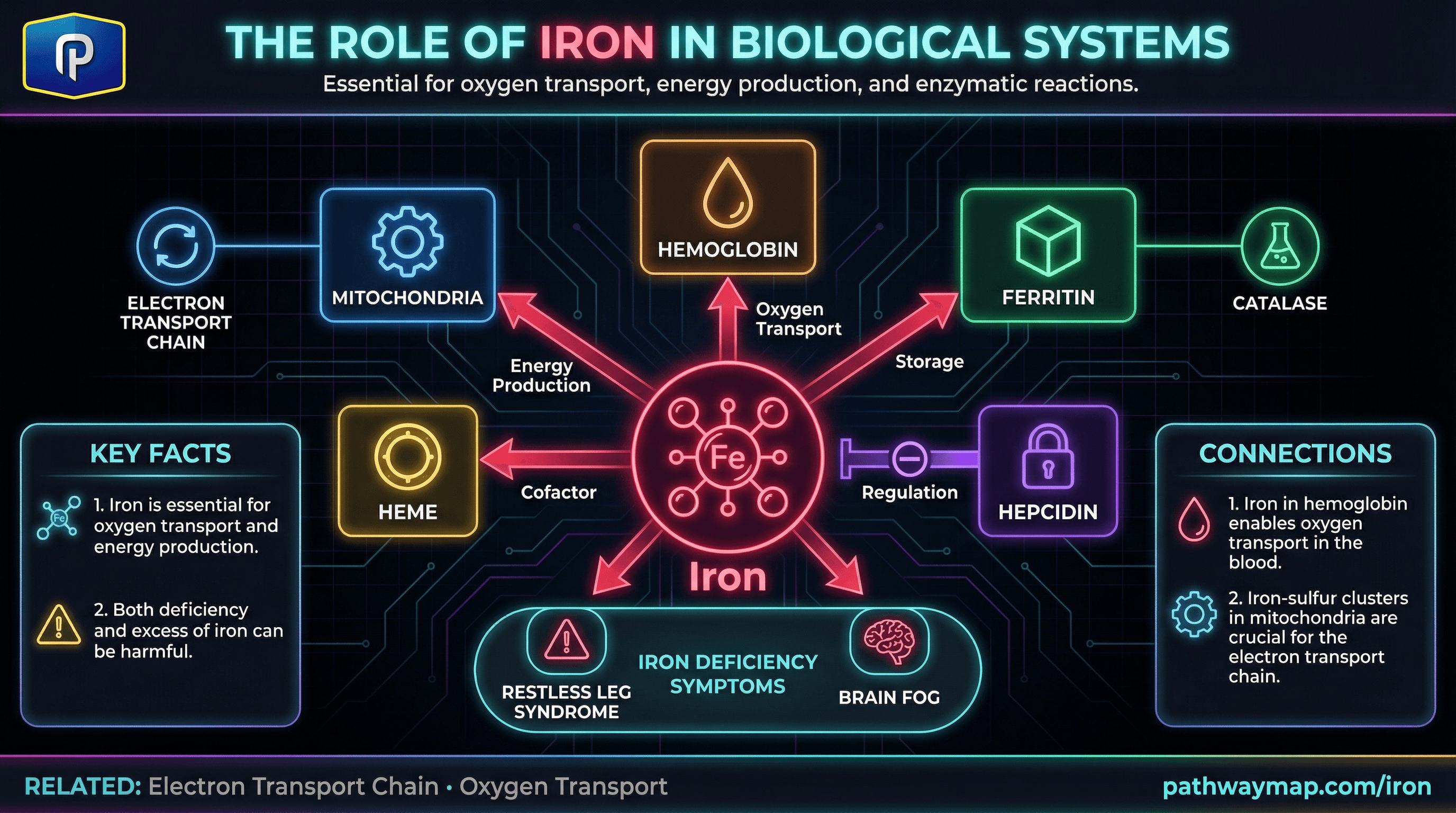
Iron
Iron in cytochromes and iron-sulfur clusters is essential for electron transfer
Essential mineral for oxygen transport, energy production, and many enzymatic reactions. Both deficiency and excess are harmful.
Iron
Iron-sulfur clusters are critical components of electron transport chain complexes
Essential mineral for oxygen transport, energy production, and many enzymatic reactions. Both deficiency and excess are harmful.