FAD (Flavin Adenine Dinucleotide)
Coenzyme derived from riboflavin (B2); electron carrier in redox reactions; required by many dehydrogenases.

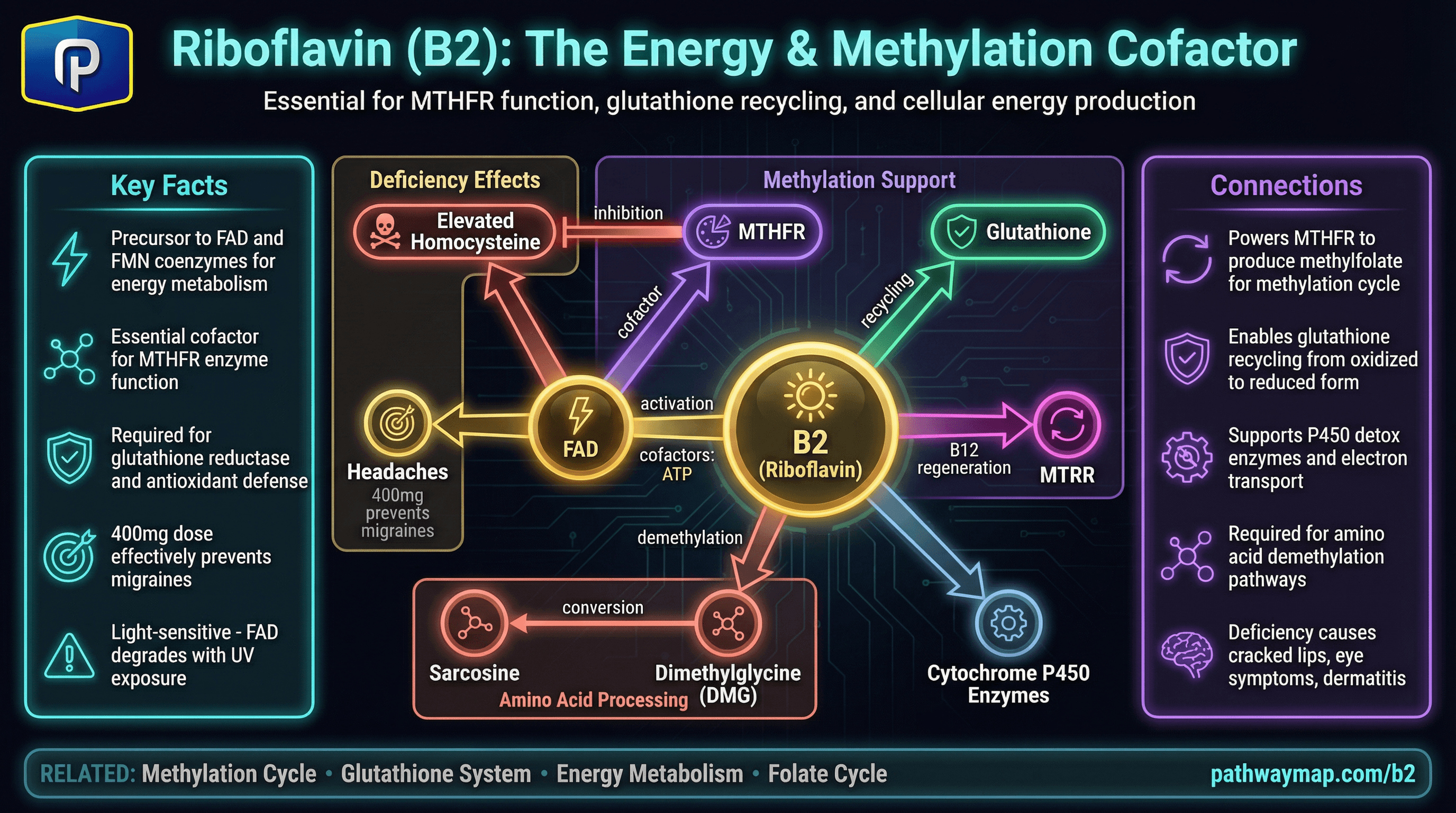
Flavin Adenine Dinucleotide (FAD) is a redox-active coenzyme derived from riboflavin (vitamin B2). FAD accepts two electrons and two protons to become FADH2. FAD-dependent enzymes (flavoproteins) are involved in: energy metabolism (succinate dehydrogenase in Krebs cycle, electron transport chain Complex II), fatty acid oxidation (acyl-CoA dehydrogenases), amino acid metabolism (MTHFR, MTRR), neurotransmitter metabolism (MAO), and xenobiotic metabolism (cytochrome P450 reductase).
FADH2 from the Krebs cycle feeds electrons to the ETC at Complex II, generating ~1.5 ATP. FMN (flavin mononucleotide) is another B2-derived coenzyme with similar functions. Riboflavin deficiency impairs all FAD-dependent reactions.
Metabolic Connections
FAD (Flavin Adenine Dinucleotide) connects to 7 other pathways.
B Vitamins
Metabolic Cycles

Electron Transport Chain
FADH2 donates electrons to Complex II of the electron transport chain
Mitochondrial system that produces most cellular ATP through oxidative phosphorylation. Requires CoQ10, iron, and B vitamins.
Krebs Cycle
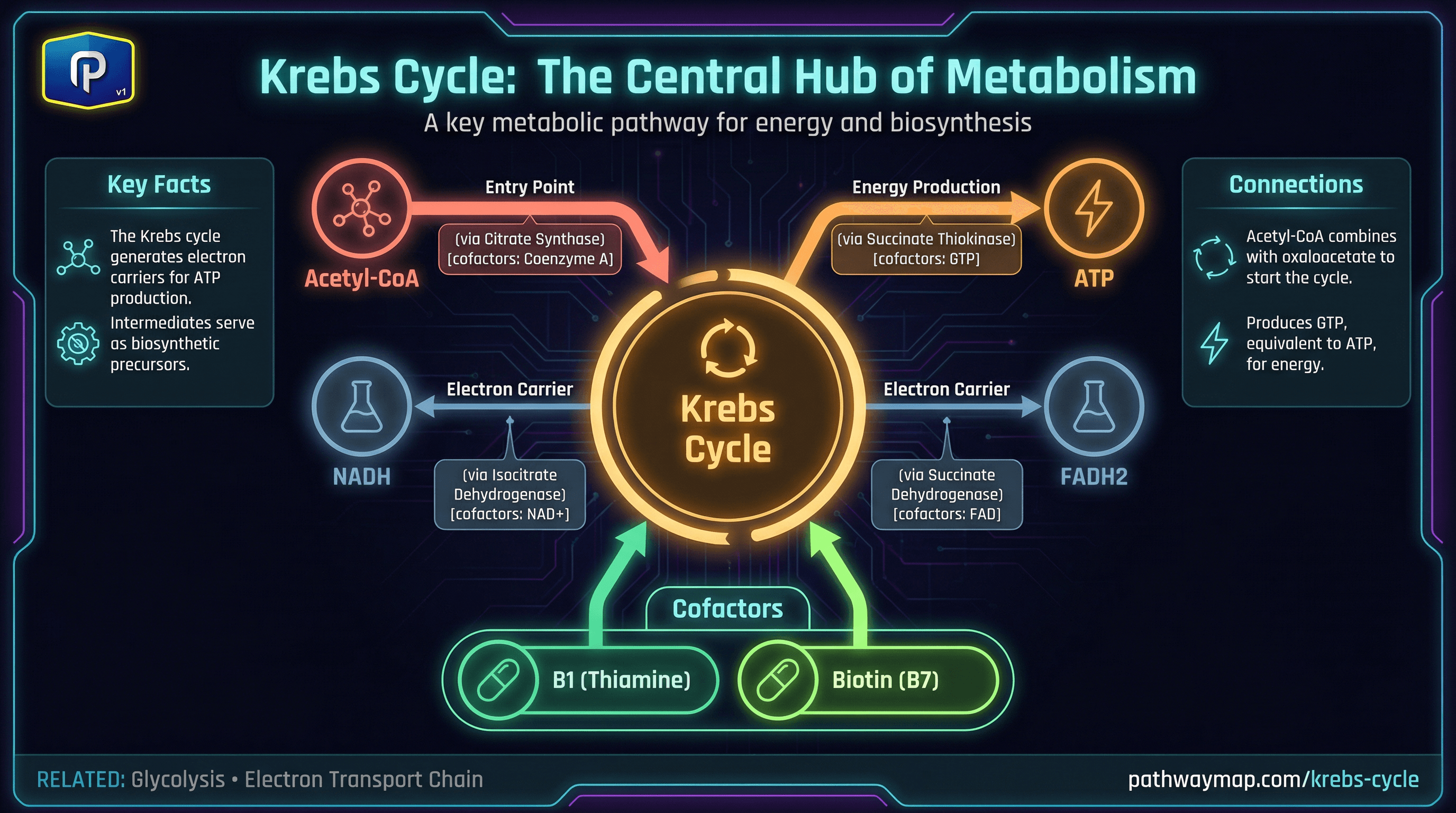
FAD is reduced to FADH2 by succinate dehydrogenase in the Krebs cycle
Central metabolic pathway (citric acid cycle) that generates electron carriers for ATP production and biosynthetic precursors.

Mitochondria
Many mitochondrial enzymes require FAD for electron transfer
Cellular powerhouses that produce ATP through oxidative phosphorylation. Also regulate apoptosis and calcium signaling.
Methylation

MTHFR
MTHFR requires FAD as cofactor for converting methyleneTHF to methylTHF
Methylenetetrahydrofolate reductase - converts folate to methylfolate for the methylation cycle. Common genetic variants reduce function.

MTRR
MTRR requires FAD to regenerate oxidized methionine synthase
Methionine synthase reductase - regenerates active methylcobalamin for the MTR enzyme.