Coenzyme A (CoA)
Central coenzyme in metabolism; derived from B5; carries acyl groups for energy metabolism and biosynthesis.

Coenzyme A (CoA) is a coenzyme derived from pantothenic acid (B5), cysteine, and ATP. It carries acyl groups (as thioesters) in metabolic reactions, most famously as acetyl-CoA. Acetyl-CoA is central to metabolism: it's the entry point to the Krebs cycle, the building block for fatty acid and cholesterol synthesis, and the acetyl donor for acetylation reactions.
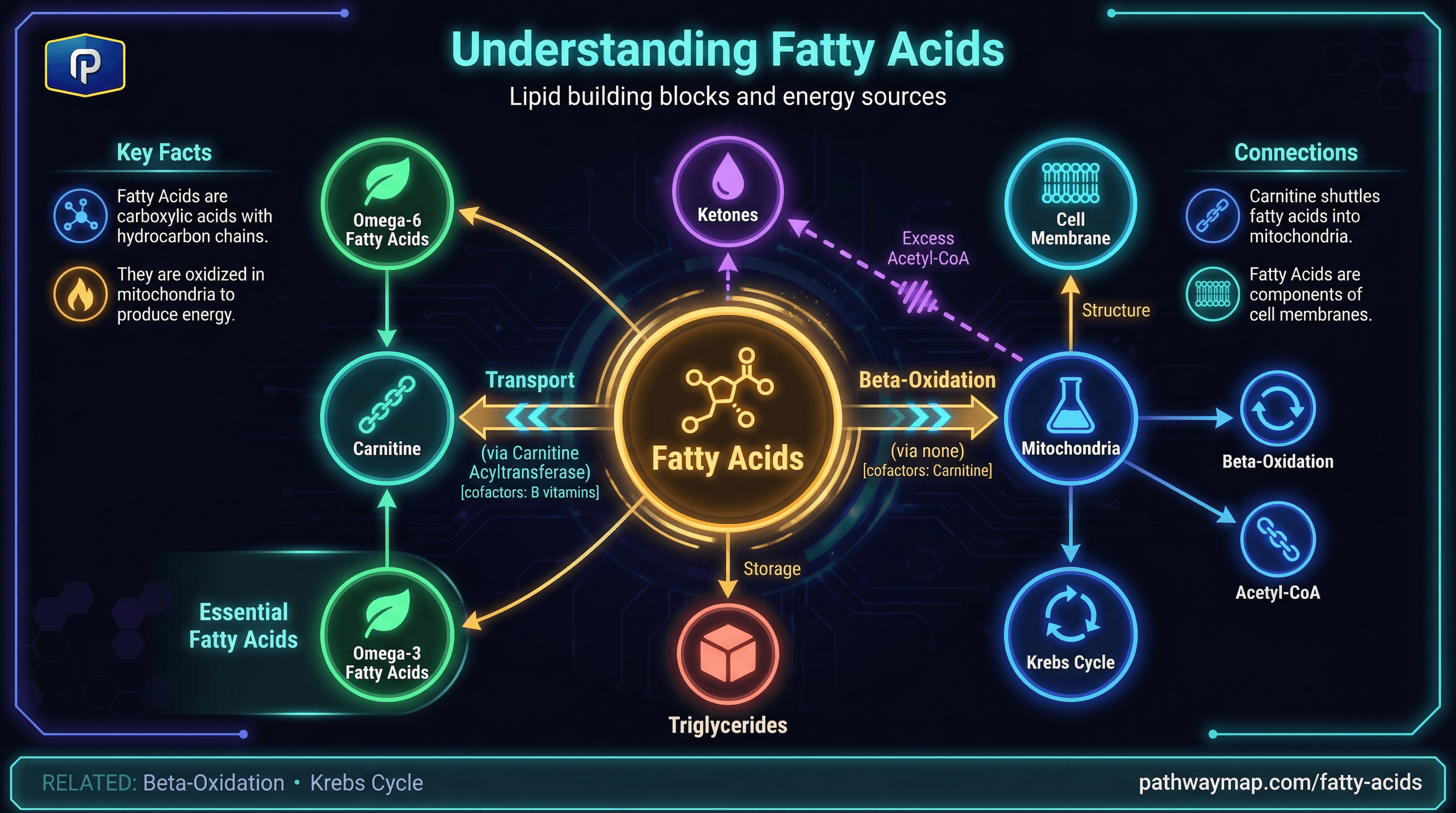
CoA participates in: fatty acid activation for beta-oxidation, fatty acid synthesis, cholesterol synthesis, ketone body metabolism, amino acid metabolism, and neurotransmitter synthesis (acetylcholine). Without adequate B5 for CoA synthesis, energy metabolism is impaired.
The ratio of CoA to acetyl-CoA is an important metabolic indicator.
Metabolic Connections
Coenzyme A (CoA) connects to 7 other pathways.



B Vitamins

Vitamin B5 (Pantothenic Acid)
CoA is synthesized from pantothenic acid (B5)
Essential for CoA synthesis; required for fatty acid metabolism, steroid synthesis, and acetylcholine production.
Vitamin B5 (Pantothenic Acid)
B5 is a component of coenzyme A
Essential for CoA synthesis; required for fatty acid metabolism, steroid synthesis, and acetylcholine production.