Fatty Acids
Lipid building blocks; energy source via beta-oxidation; components of membranes; include saturated, mono, and polyunsaturated types.
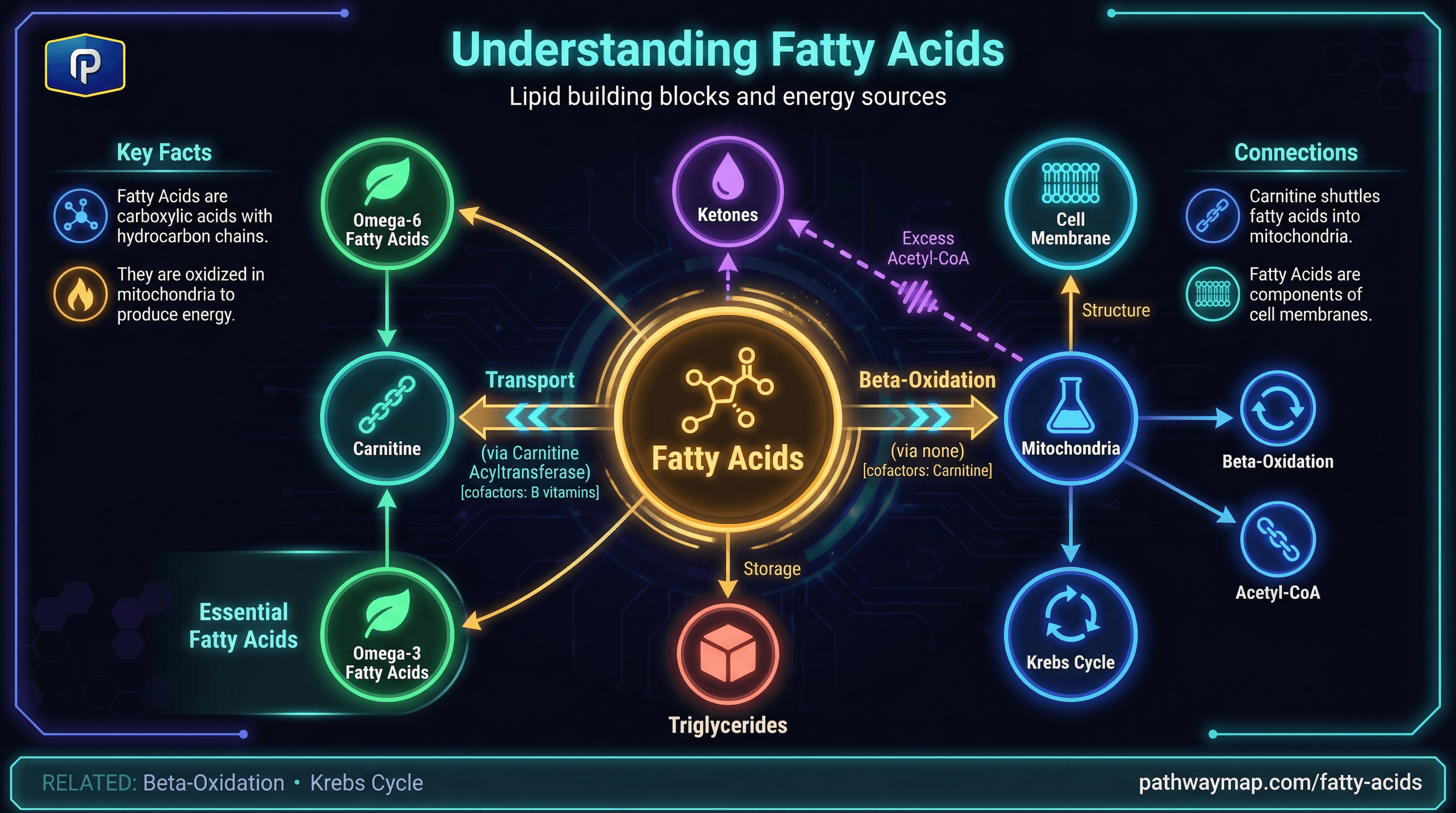
Fatty acids are carboxylic acids with hydrocarbon chains that serve as building blocks for complex lipids, energy storage, and signaling molecules. They are classified by saturation: saturated (no double bonds - palmitate, stearate), monounsaturated (one double bond - oleic acid), and polyunsaturated (multiple double bonds - omega-3, omega-6).
Fatty acids are stored as triglycerides in adipose tissue and released during fasting for energy. Beta-oxidation in mitochondria breaks down fatty acids to acetyl-CoA for the Krebs cycle, generating NADH and FADH2 - this requires carnitine for mitochondrial transport and B vitamins.
Essential fatty acids (linoleic acid, alpha-linolenic acid) cannot be synthesized and must be obtained from diet.
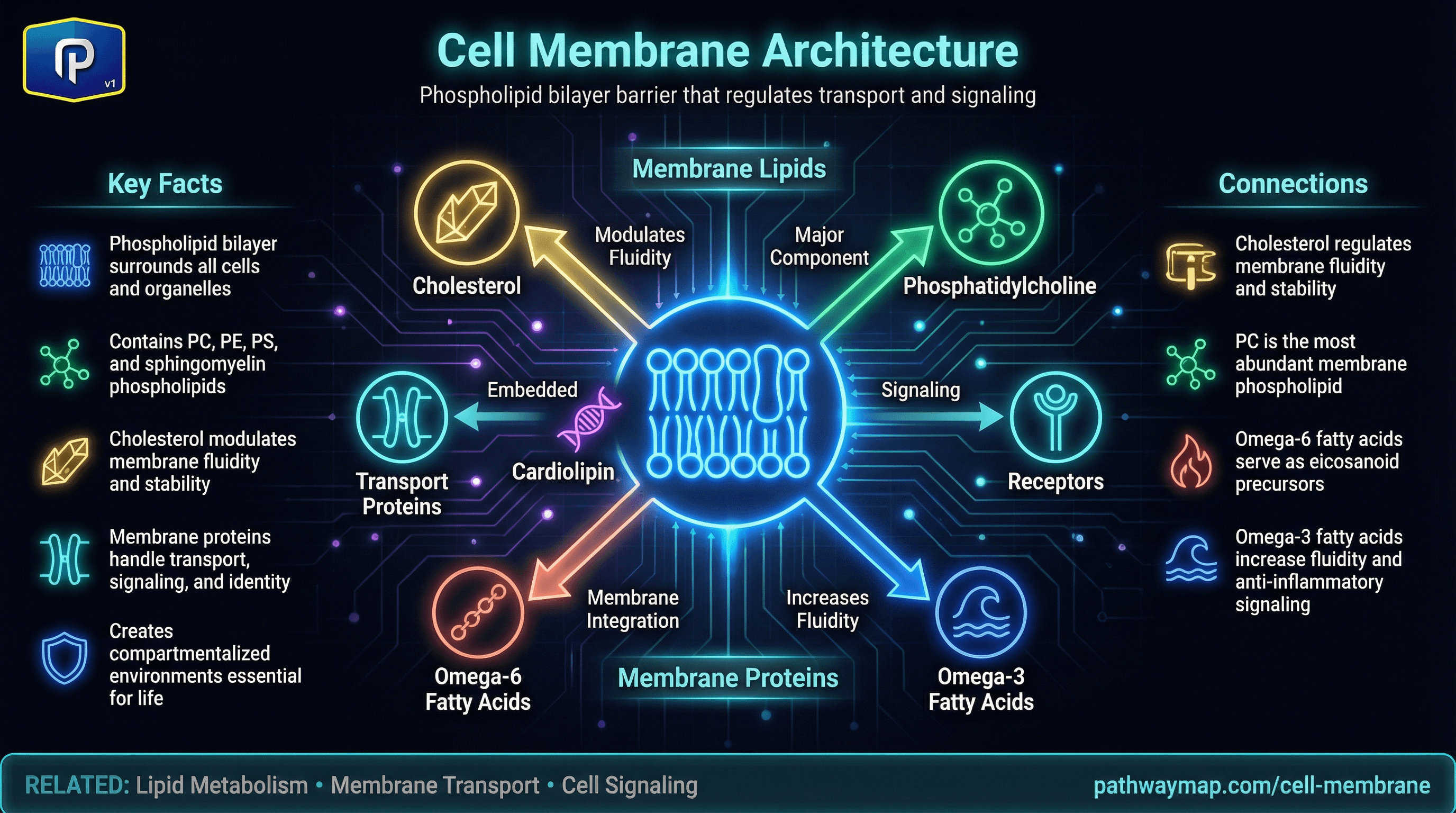
Fatty acid composition of membranes affects fluidity and function.
Metabolic Connections
Fatty Acids connects to 10 other pathways.
Cofactors

Carnitine
Carnitine shuttles fatty acids into mitochondria for beta-oxidation
Amino acid derivative that transports long-chain fatty acids into mitochondria for energy production.

Coenzyme A (CoA)
CoA is required for fatty acid synthesis and oxidation
Central coenzyme in metabolism; derived from B5; carries acyl groups for energy metabolism and biosynthesis.

Metabolites
Ketones
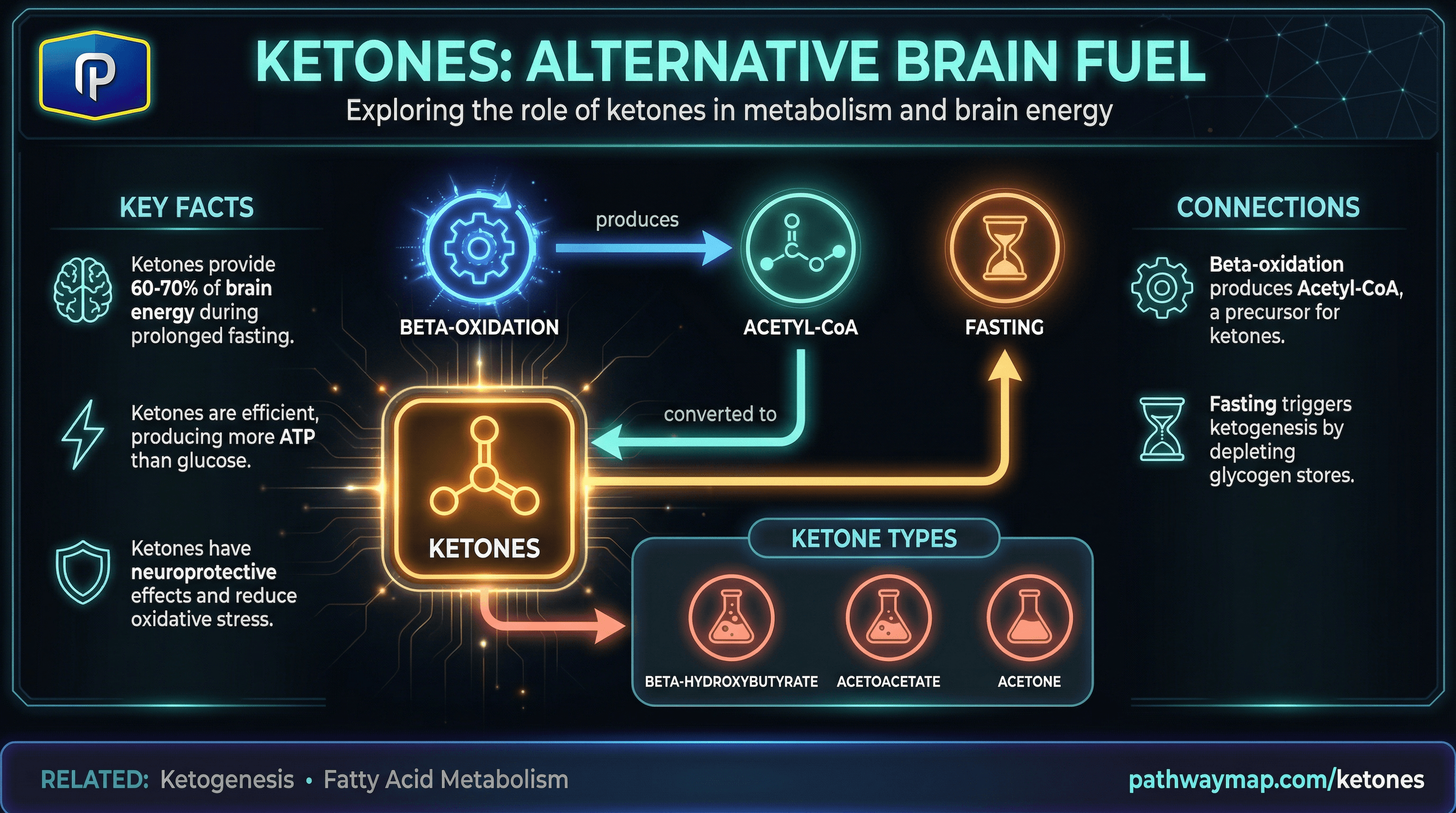
Fatty acids are converted to ketones when acetyl-CoA exceeds Krebs capacity
Alternative brain fuel produced from fat during fasting or low-carb eating. Include beta-hydroxybutyrate, acetoacetate, and acetone.

Triglycerides
Triglycerides are storage form of fatty acids
Main form of stored and dietary fat. Elevated levels indicate metabolic dysfunction and cardiovascular risk.


