DHEA
The mother of hormones. DHEA (dehydroepiandrosterone) is your most abundant steroid hormone, serving as the raw material for testosterone, estrogen, and other sex hormones. It peaks in your 20s and declines steadily—a key marker of biological aging.
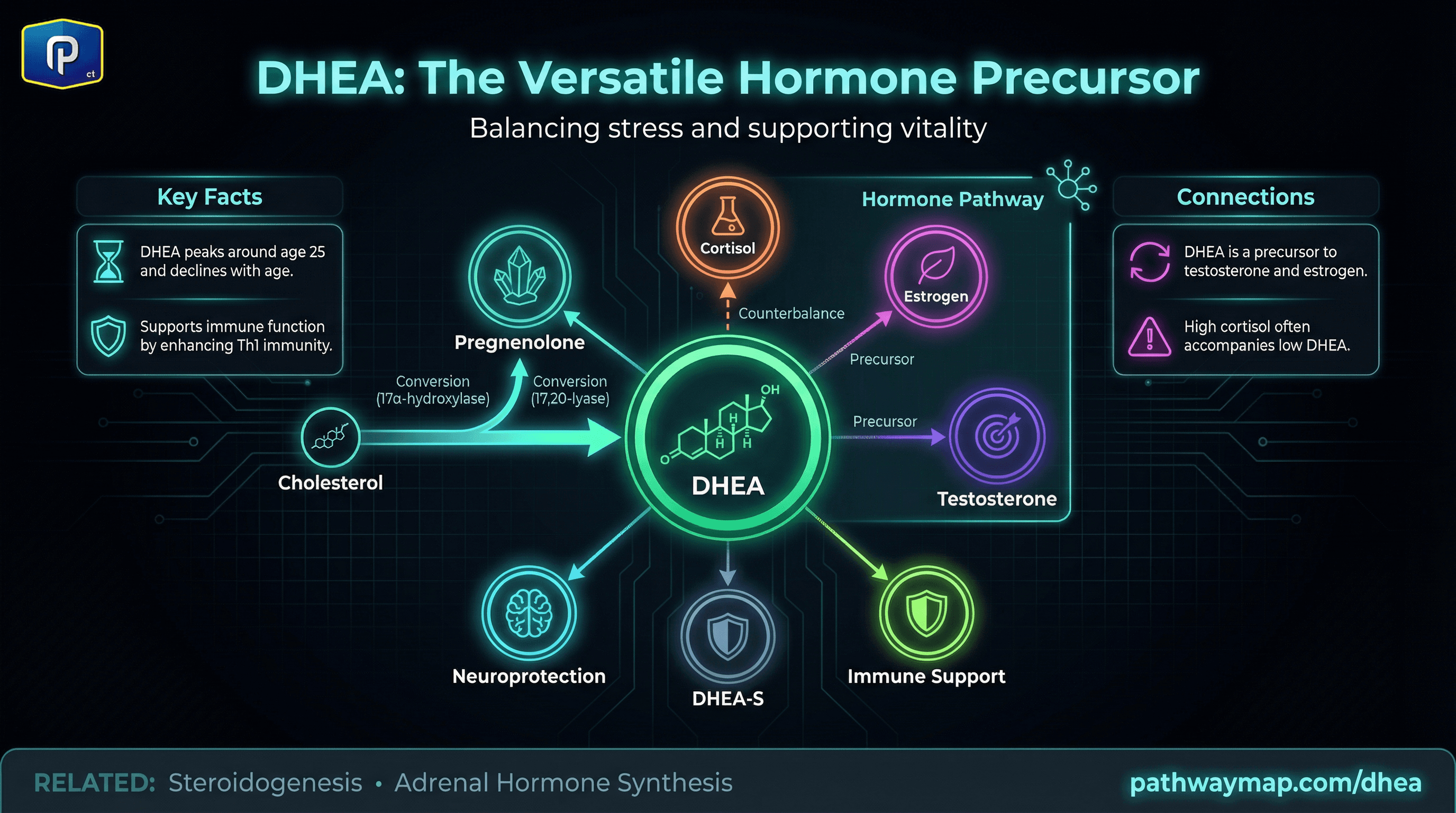
What DHEA Does
Hormone Precursor
Converts to testosterone, estrogen, and other androgens in tissues that need them.
Neurosteroid
Affects brain function, mood, memory. Has its own receptors in brain tissue.
Immune Modulation
Enhances immune function and counters immunosuppressive effects of cortisol.
Bone Health
Supports bone density through conversion to estrogens and androgens.
Body Composition
Influences muscle mass and fat distribution. Low levels linked to visceral fat.
Skin Health
Converted to androgens in skin. Supports sebum production and skin thickness.
The Steroid Cascade
DHEA/Cortisol Ratio
The balance between DHEA and cortisol is a key indicator of stress adaptation and aging:
Healthy Ratio
Higher DHEA relative to cortisol indicates youth, resilience, and anabolic state.
Shifted Ratio
Low DHEA with high cortisol = chronic stress, accelerated aging, catabolism.
Pregnenolone Steal
Under chronic stress, pregnenolone shunts to cortisol pathway, starving DHEA production.
Adrenal Fatigue Pattern
Eventually both drop as adrenals exhaust. Low DHEA-S is a common finding.
Testing & Supplementation
DHEA-S Test
Blood test measures sulfated form. Stable throughout day. Compare to age-appropriate ranges.
Typical Doses
Women: 5-25mg/day. Men: 25-50mg/day. Start low and retest after 6-8 weeks.
7-Keto DHEA
Metabolite that doesn't convert to sex hormones. Used for metabolism without hormonal effects.
Cautions
Avoid with hormone-sensitive conditions. Can cause acne, hair loss in women. Monitor levels.