Estrogen
More than a reproductive hormone. Estrogen affects brain, bone, heart, and metabolism— and its safe clearance depends on methylation, liver, and gut health.
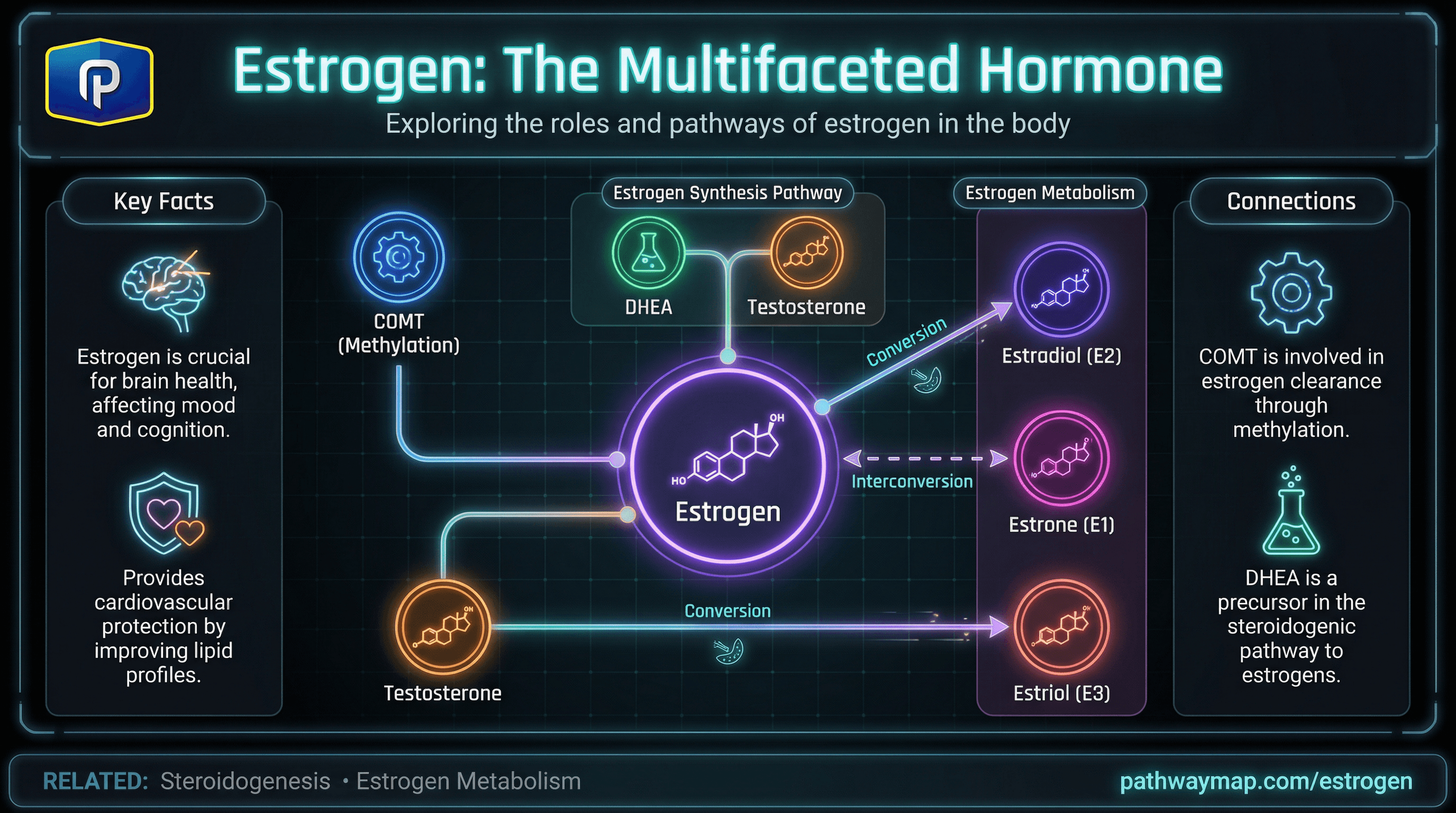
💊 The Three Estrogens
Estrone (E1)
Storage form. Predominates postmenopausally. Made from fat tissue aromatization.
Estradiol (E2)
Most potent. Primary form in reproductive years. Made by ovaries.
Estriol (E3)
Weakest. Predominates in pregnancy. Considered protective.
🔄 Estrogen Metabolism Matters
How you clear estrogen is as important as how much you have. Phase 1 produces metabolites; Phase 2 conjugates them for excretion:
2-hydroxy (Favorable)
Weak estrogen activity. Easily cleared. Preferred pathway.
16-hydroxy
Still estrogenic. Not harmful but less ideal.
4-hydroxy (Risky)
Can become genotoxic quinones. Needs glutathione.
⚠️ Estrogen Dominance
High estrogen relative to progesterone, not necessarily high absolute estrogen:
Symptoms
- • PMS, heavy periods
- • Breast tenderness, fibroids
- • Weight gain (hips/thighs)
- • Mood swings, anxiety
- • Endometriosis
Causes
- • Obesity (fat makes estrogen)
- • Poor liver clearance
- • Gut dysbiosis (recirculation)
- • Xenoestrogen exposure
- • Progesterone deficiency
✅ Supporting Healthy Estrogen Clearance
DIM/I3C
Promotes 2-hydroxylation pathway
Cruciferous Veggies
Natural source of DIM precursors
B Vitamins
Support methylation (COMT needs SAMe)
Fiber
Binds estrogen in gut, prevents recirculation
Liver Support
Phase 1 and 2 detox capacity
Gut Health
Healthy microbiome, regular elimination
Metabolic Connections

COMT
Methylates estrogen metabolites for clearance

Glutathione
Protects against reactive estrogen metabolites

Copper
Estrogen increases copper retention

Progesterone
Must be balanced with estrogen

Thyroid
Estrogen affects thyroid hormone transport

Histamine
Estrogen increases histamine; histamine increases estrogen