DHFR (Dihydrofolate Reductase)
Enzyme reducing dihydrofolate to THF; target of methotrexate; essential for maintaining folate pool.

Dihydrofolate Reductase (DHFR) catalyzes the reduction of dihydrofolate (DHF) to tetrahydrofolate (THF) using NADPH.
This reaction is essential because: 1) dietary folic acid must be reduced to THF to be active, and 2) when thymidylate synthase uses 5,10-methyleneTHF to make thymidine for DNA, DHF is produced and must be recycled back to THF.
DHFR is the target of methotrexate (used in cancer and autoimmune disease), trimethoprim (antibiotic), and pyrimethamine (antimalarial). These drugs cause folate depletion by blocking THF regeneration. Folic acid (synthetic) requires DHFR for activation, while 5-MTHF (methylfolate) bypasses DHFR and may be preferred when DHFR is limited or inhibited.
Metabolic Connections
DHFR (Dihydrofolate Reductase) connects to 7 other pathways.
B Vitamins

Folate
DHFR activates folic acid and recycles the folate pool
Vitamin B9 - essential for DNA synthesis, methylation, and cell division. Critical during pregnancy for neural tube development.
Folate
DHFR reduces dietary folic acid to THF
Vitamin B9 - essential for DNA synthesis, methylation, and cell division. Critical during pregnancy for neural tube development.
Cofactors
NADPH
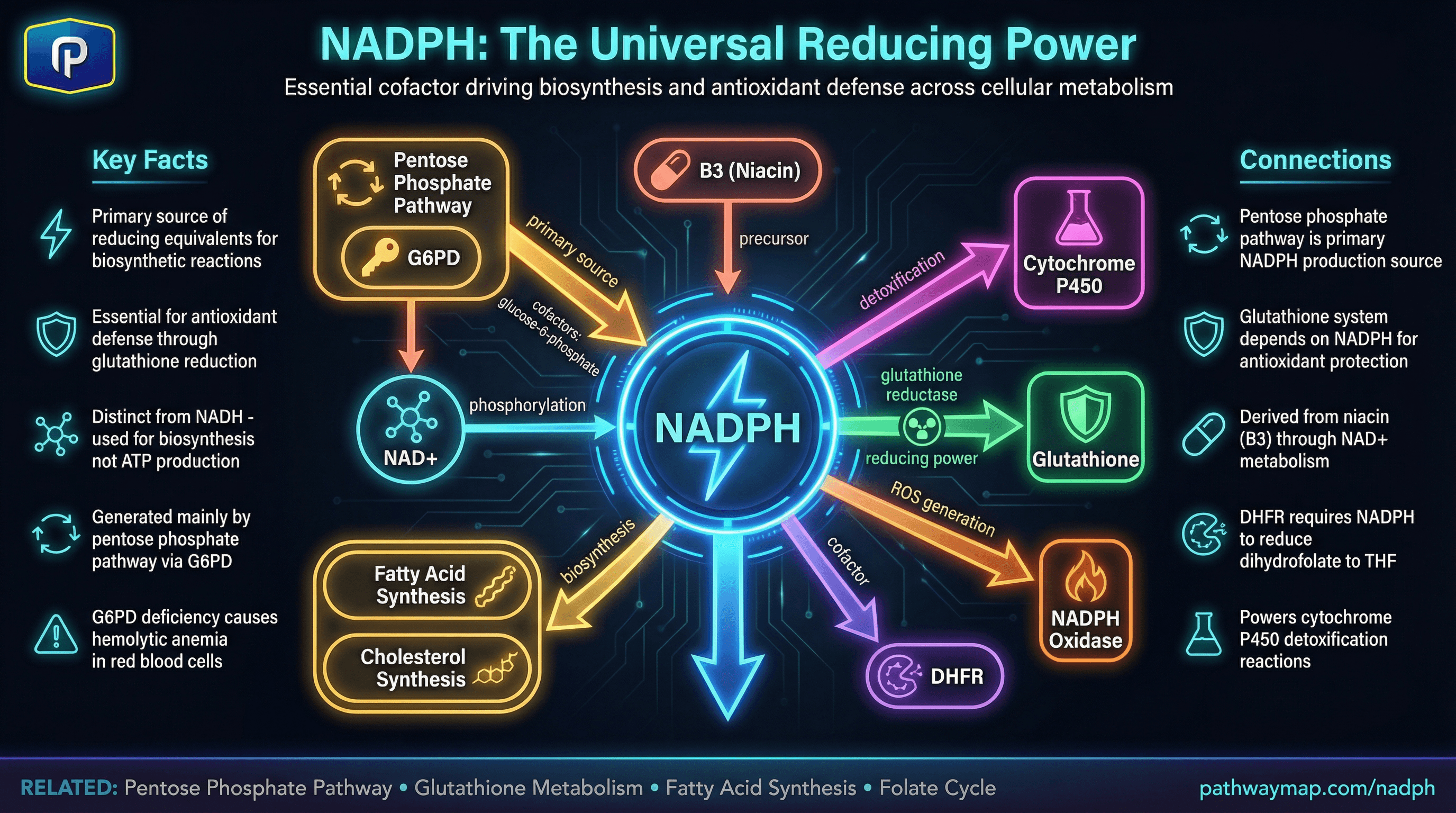
NADPH provides reducing equivalents for DHFR
Reduced nicotinamide adenine dinucleotide phosphate; provides reducing power for biosynthesis and antioxidant defense.
NADPH
DHFR uses NADPH to reduce dihydrofolate to THF
Reduced nicotinamide adenine dinucleotide phosphate; provides reducing power for biosynthesis and antioxidant defense.

THF (Tetrahydrofolate)
DHFR produces THF by reducing dihydrofolate
Active form of folate; carrier of one-carbon units; essential for nucleotide synthesis and methylation.
THF (Tetrahydrofolate)
DHFR reduces dihydrofolate back to THF
Active form of folate; carrier of one-carbon units; essential for nucleotide synthesis and methylation.