Kynurenine Pathway
Tryptophan degradation pathway; produces NAD+ de novo; generates neuroactive metabolites; upregulated by inflammation.

The kynurenine pathway is the primary route of tryptophan catabolism and the only de novo pathway for NAD+ synthesis in humans.
About 95% of dietary tryptophan is metabolized through this pathway, with only 1-2% going to serotonin.
The pathway begins with IDO (indoleamine 2,3-dioxygenase) or TDO (tryptophan 2,3-dioxygenase) converting tryptophan to N-formylkynurenine, then kynurenine. From kynurenine, the pathway branches to produce: quinolinic acid (neurotoxic, converted to NAD+), kynurenic acid (neuroprotective), and 3-hydroxykynurenine (generates ROS).
Inflammation strongly activates IDO, shunting tryptophan toward kynurenine and away from serotonin - this may contribute to depression during illness. B6 and B2 are required for several pathway enzymes.
Metabolic Connections
Kynurenine Pathway connects to 8 other pathways.
B Vitamins
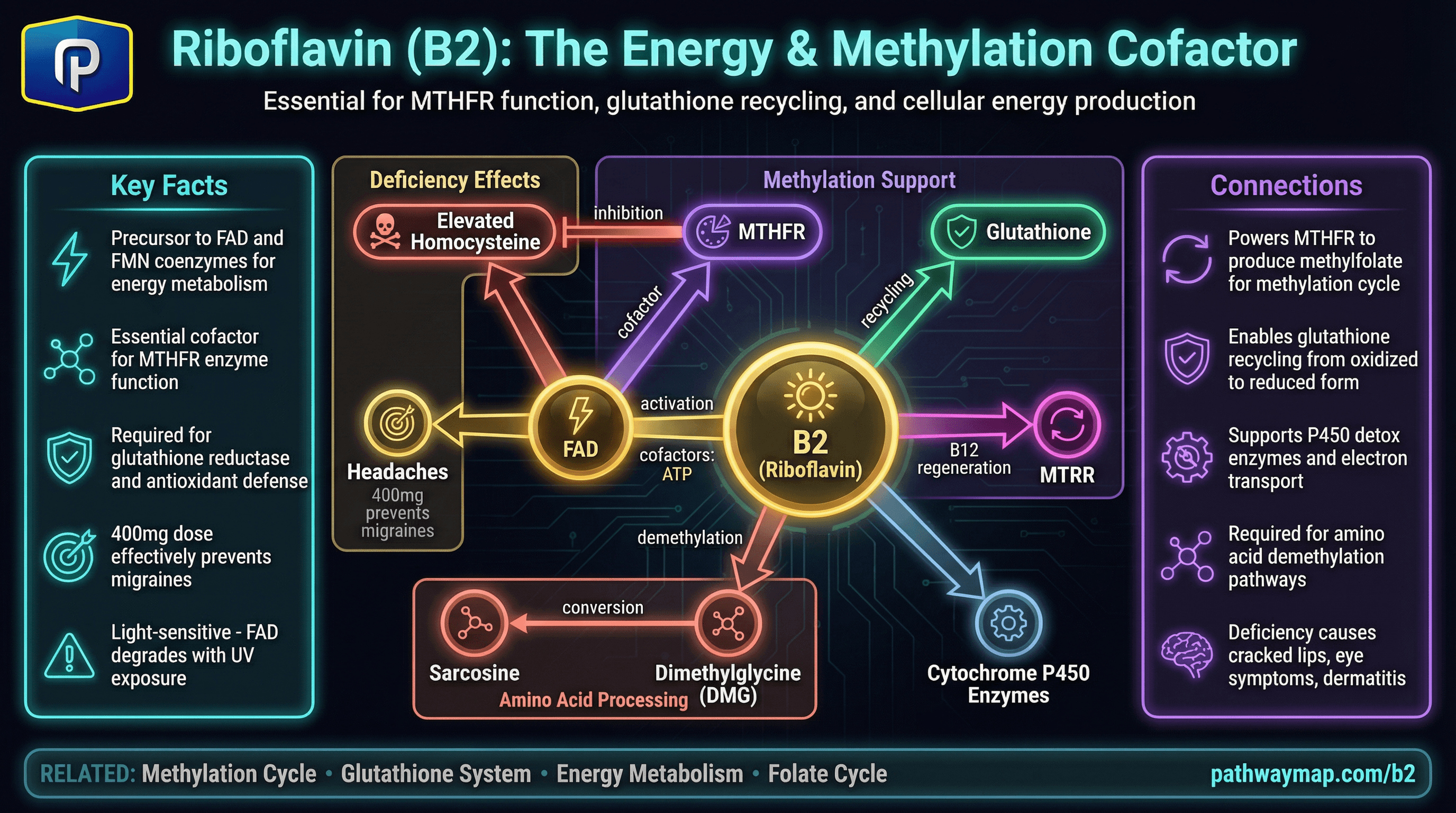
B2
B2 (as FAD) is required for kynurenine 3-monooxygenase
Riboflavin - critical cofactor for MTHFR, glutathione recycling, and energy production.
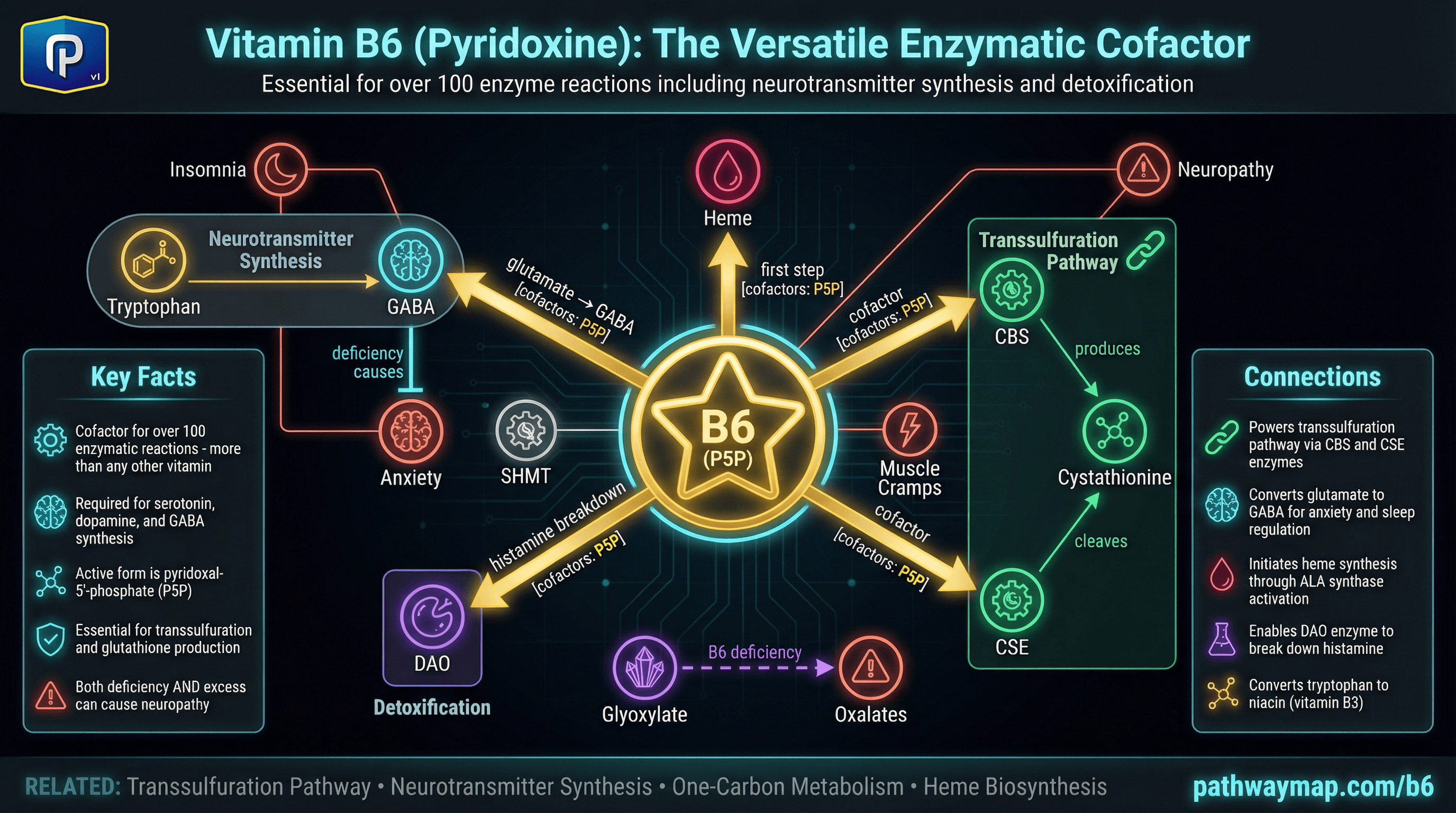
B6
B6 is required for kynurenine aminotransferase and other pathway enzymes
Pyridoxine - essential for over 100 enzyme reactions including neurotransmitter synthesis and transsulfuration.
Conditions

Depression
Inflammation-driven tryptophan shunting to kynurenine may contribute to depression
Mood disorder involving persistent low mood; associated with neurotransmitter, inflammatory, and metabolic dysregulation.
Depression
Inflammation-activated kynurenine pathway may contribute to depression
Mood disorder involving persistent low mood; associated with neurotransmitter, inflammatory, and metabolic dysregulation.


