Addiction
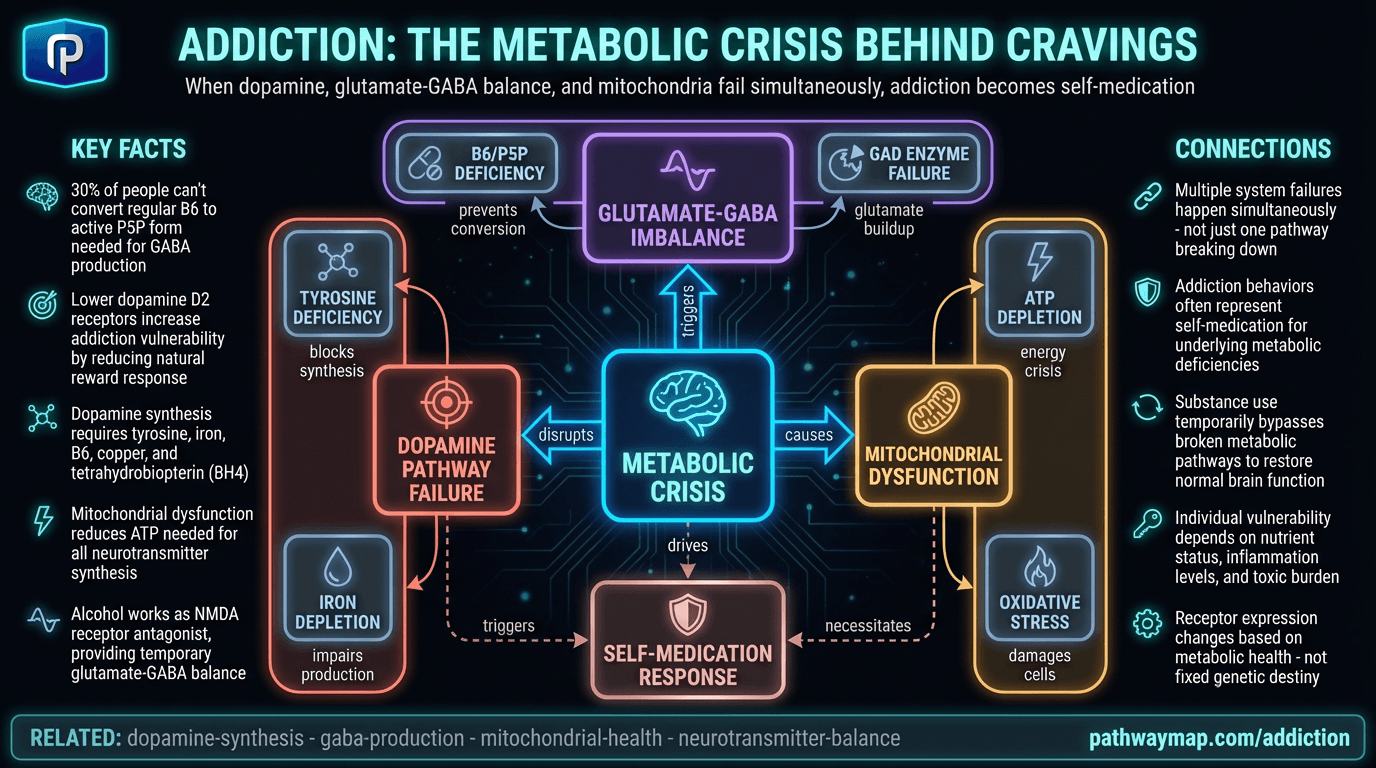
The hijacked brain. Addiction is a chronic brain disorder characterized by compulsive substance use or behavior despite harmful consequences. It hijacks the reward system—dopamine surges far exceed natural rewards, causing receptor downregulation. The prefrontal cortex (impulse control) weakens while stress circuits strengthen. It's not a choice or moral failing; it's a brain disease with genetic, environmental, and developmental components. Recovery is possible.
Brain Changes in Addiction
Reward Circuit
Massive dopamine spikes. Far exceed natural rewards. Set new "baseline."
Receptor Downregulation
Fewer dopamine receptors. Need more for same effect. Natural rewards feel flat.
Prefrontal Weakening
Decision-making impaired. Impulse control reduced. "Go" system dominates.
Stress Sensitization
Extended amygdala changes. Withdrawal = stress state. Negative reinforcement.
Habit Formation
Basal ganglia circuits. Automatic behaviors. Cue-triggered using.
Memory Hijacking
Strong drug-cue associations. Hippocampus, amygdala. Triggers cravings.
Types of Addiction
Substance Addictions
- • Alcohol (GABA, glutamate)
- • Opioids (mu receptors)
- • Stimulants (dopamine, norepinephrine)
- • Nicotine (acetylcholine receptors)
- • Cannabis (endocannabinoid)
Behavioral Addictions
- • Gambling (variable reward)
- • Gaming
- • Social media
- • Pornography
- • Shopping
Recovery Factors
Brain Plasticity
Brain can heal. Receptor upregulation. PFC function returns. Takes time.
Social Connection
Isolation worsens addiction. Support crucial. Alternative rewards. Belonging.
Exercise
Natural dopamine boost. Stress reduction. New habits. Brain healing.
Medication
MAT for opioids. Naltrexone. Buprenorphine. Reduces cravings.
Therapy
CBT for cue management. Trauma work. Motivational interviewing.
Purpose
Meaningful activities. Goals beyond sobriety. Alternative reinforcement.