Stress
The silent epidemic. Acute stress saves your life. Chronic stress destroys it—depleting nutrients, disrupting hormones, damaging organs, and accelerating aging.
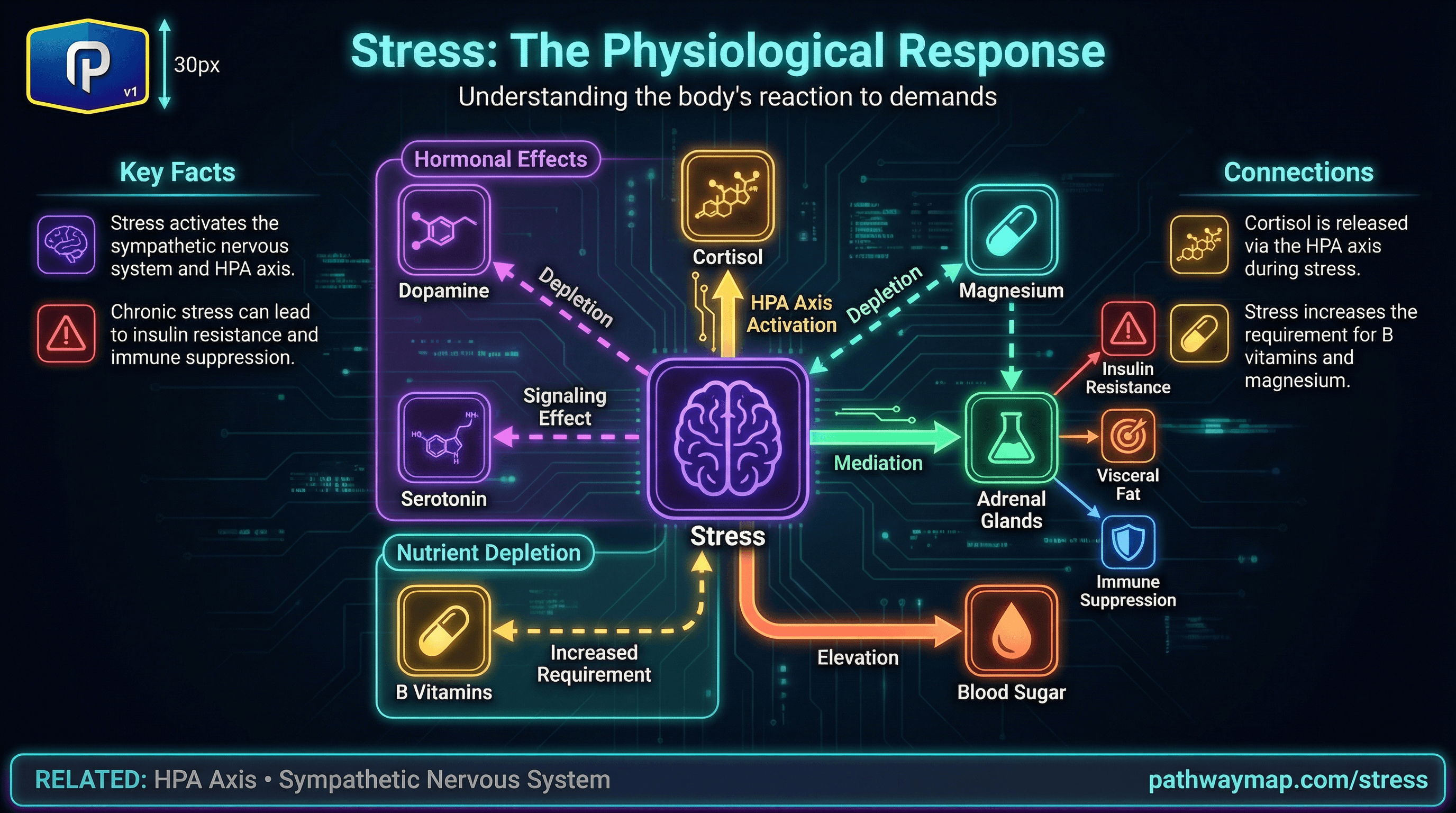
Acute vs Chronic Stress
Acute Stress (Good)
- • Short-term, resolves quickly
- • Mobilizes energy for action
- • Sharpens focus and performance
- • Immune system briefly boosted
- • Recovery follows stress
- • This is what we evolved for
Chronic Stress (Destructive)
- • Long-term, never resolves
- • Depletes energy reserves
- • Impairs cognition and memory
- • Immune system suppressed
- • No recovery—constant demand
- • This is modern life
⚠️ Modern Chronic Stressors
Psychological
Work pressure, financial worry, relationships, social media, news cycle, perfectionism.
Physical
Poor sleep, overtraining, chronic pain, illness, surgeries, injuries.
Chemical
Toxins, heavy metals, pesticides, medications, alcohol, caffeine excess.
Inflammatory
Chronic infections, gut dysbiosis, food sensitivities, autoimmune conditions.
Electromagnetic
Blue light at night, constant screen time, WiFi, cell phones, artificial lighting.
Nutritional
Blood sugar swings, nutrient deficiencies, processed food, skipped meals.
How Chronic Stress Damages the Body
Brain
- • Shrinks hippocampus (memory)
- • Impairs prefrontal cortex
- • Increases anxiety/depression
- • Brain fog
Hormones
- • Cortisol dysregulation
- • Thyroid suppression
- • Sex hormone disruption
- • Insulin resistance
Gut
- • Leaky gut
- • Microbiome disruption
- • Reduced digestive function
- • IBS symptoms
Immune
- • Suppressed immunity
- • Chronic inflammation
- • Autoimmune triggers
- • Slower healing
Heart
- • High blood pressure
- • Increased heart rate
- • Atherosclerosis
- • Heart disease risk
Nutrients
- • Depletes magnesium
- • Burns through B vitamins
- • Uses up vitamin C
- • Zinc depletion
Stress Depletes These Nutrients
Chronic stress rapidly burns through key nutrients. This creates deficiencies that make stress tolerance worse—a vicious cycle.
Magnesium
The anti-stress mineral. Depleted within hours of stress.
Vitamin C
Highest concentration in adrenals. Used rapidly during stress.
B Vitamins
Essential for nervous system. Stress burns through them fast.
Zinc
Immune support. Excreted more during chronic stress.
✅ Managing Chronic Stress
Remove Stressors
Can't supplement your way out. Identify and reduce actual stress sources.
Prioritize Sleep
7-9 hours. This is when you recover. Non-negotiable for stress management.
Morning Sunlight
Sets cortisol rhythm. 10-20 minutes of outdoor light within an hour of waking.
Blood Sugar Stability
Every blood sugar crash triggers cortisol. Protein at each meal. Avoid sugar.
Breathwork
Activates parasympathetic. Box breathing, 4-7-8 breathing, slow exhales.
Nature Exposure
Forest bathing reduces cortisol. Get outside, ideally barefoot on earth.
Magnesium
300-400mg glycinate or threonate. The most important stress supplement.
Adaptogens
Ashwagandha, rhodiola, holy basil help modulate the stress response.
Social Connection
Isolation is a stressor. Quality relationships buffer stress effects.
Metabolic Connections

Cortisol
The primary stress hormone—chronically elevated in modern life

Adrenal Health
Your stress response headquarters

Magnesium
Rapidly depleted by stress—creates a vicious cycle

Sleep
Stress destroys sleep; poor sleep worsens stress

Inflammation
Chronic stress drives chronic inflammation

Gut Health
Stress directly damages the gut lining