Lead
A silent poison. Lead has no biological function—any amount is harmful. It accumulates in bones for decades, damages brains, and disrupts enzymes throughout the body.
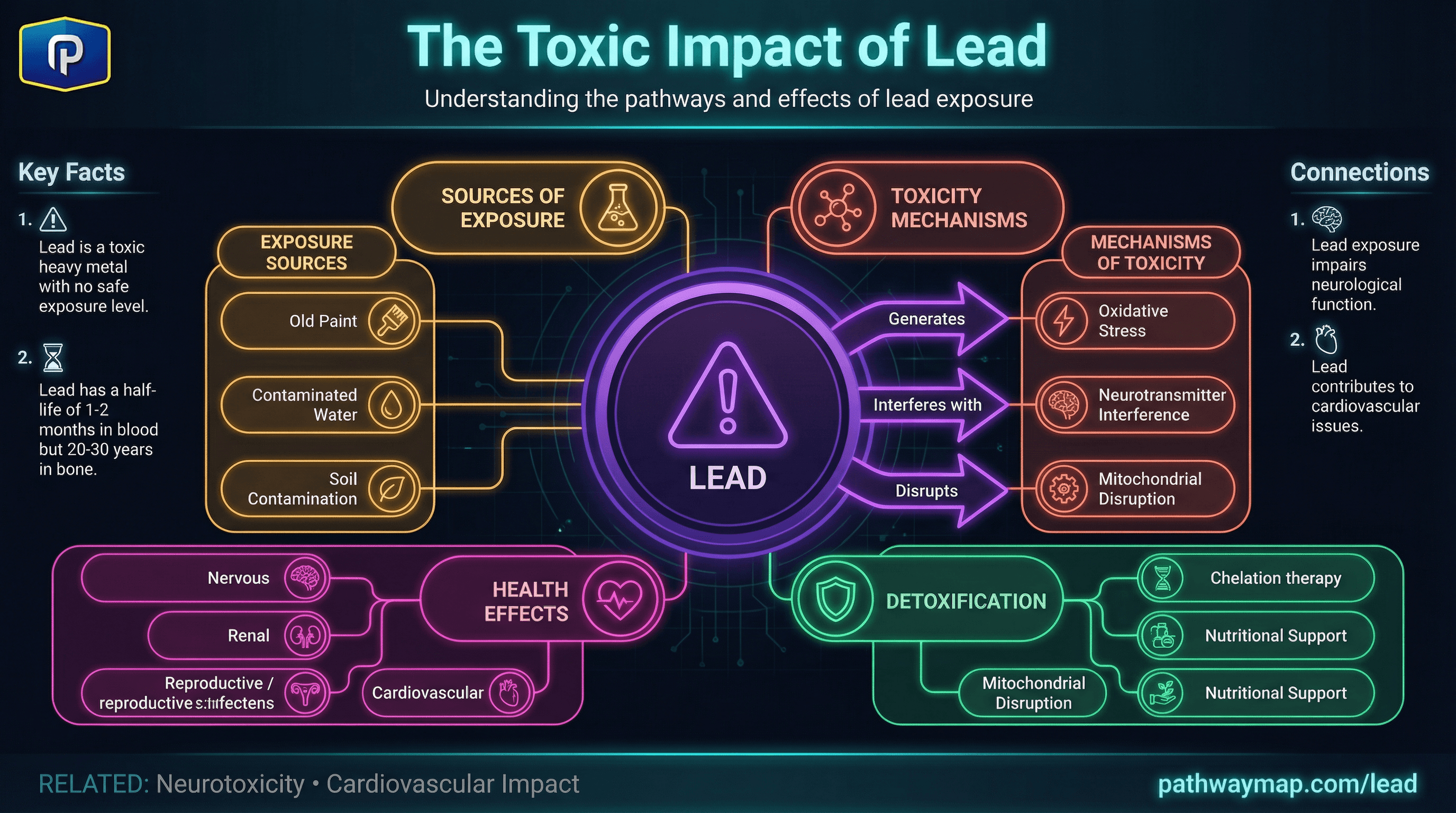
⚠️ Sources of Lead Exposure
Old Paint
Homes built before 1978. Chipping, peeling, renovation dust.
Water Pipes
Old lead pipes and solder. Hot water leaches more lead.
Contaminated Soil
Near highways (leaded gas era), industrial sites.
Imported Goods
Spices, cosmetics, pottery, toys from some countries.
Occupational
Battery manufacturing, construction, shooting ranges.
Food
Some chocolate, rice, bone broth, certain supplements.
🔴 How Lead Causes Damage
Enzyme Disruption
Lead mimics calcium, zinc, and iron, binding to enzyme sites and disrupting their function. Blocks heme synthesis, causing anemia.
Neurotoxicity
Disrupts neurotransmitter release, damages myelin, kills neurons. Effects are permanent, especially in developing brains.
Oxidative Stress
Depletes glutathione, increases free radicals, damages cell membranes.
Bone Storage
94% of body lead is stored in bones. Released during pregnancy, menopause, osteoporosis, or stress.
🚨 Signs of Lead Toxicity
Neurological
- • Cognitive decline
- • Memory problems
- • Irritability
- • Headaches
Children
- • Developmental delays
- • Learning disabilities
- • Behavioral problems
- • Lowered IQ
Physical
- • Fatigue
- • Abdominal pain
- • Constipation
- • Muscle weakness
Blood
- • Anemia
- • High blood pressure
Reproductive
- • Infertility
- • Miscarriage
- • Low sperm count
Kidneys
- • Kidney damage
- • Gout
✅ Protection & Reduction
Calcium
Blocks lead absorption in the gut. Adequate intake is protective.
Iron
Iron deficiency increases lead absorption. Keep levels optimal.
Vitamin C
Reduces blood lead levels and oxidative damage.
Zinc
Competes with lead for binding sites. Supports detox enzymes.
Source Removal
Most important step. Identify and eliminate exposure sources.
Chelation (if severe)
DMSA, EDTA—medical treatment for high levels. Requires supervision.
🧪 Testing for Lead
Blood Lead Level
Standard test. Reflects recent exposure (weeks). CDC reference: <3.5 µg/dL for children. Any detectable level is concerning.
Provoked Urine Test
Uses chelating agent to pull lead from tissues. Shows body burden, not just recent exposure.
Metabolic Connections

Iron
Lead competes with iron for absorption and enzyme sites

Calcium
Adequate calcium blocks lead absorption

Zinc
Zinc deficiency increases lead absorption

Glutathione
Master antioxidant helps with lead detoxification

Brain Health
Lead is neurotoxic, especially to developing brains

Vitamin C
Helps reduce lead levels and oxidative damage