Pentose Phosphate Pathway
Metabolic pathway producing NADPH and ribose-5-phosphate for nucleotide synthesis; branches from glycolysis.
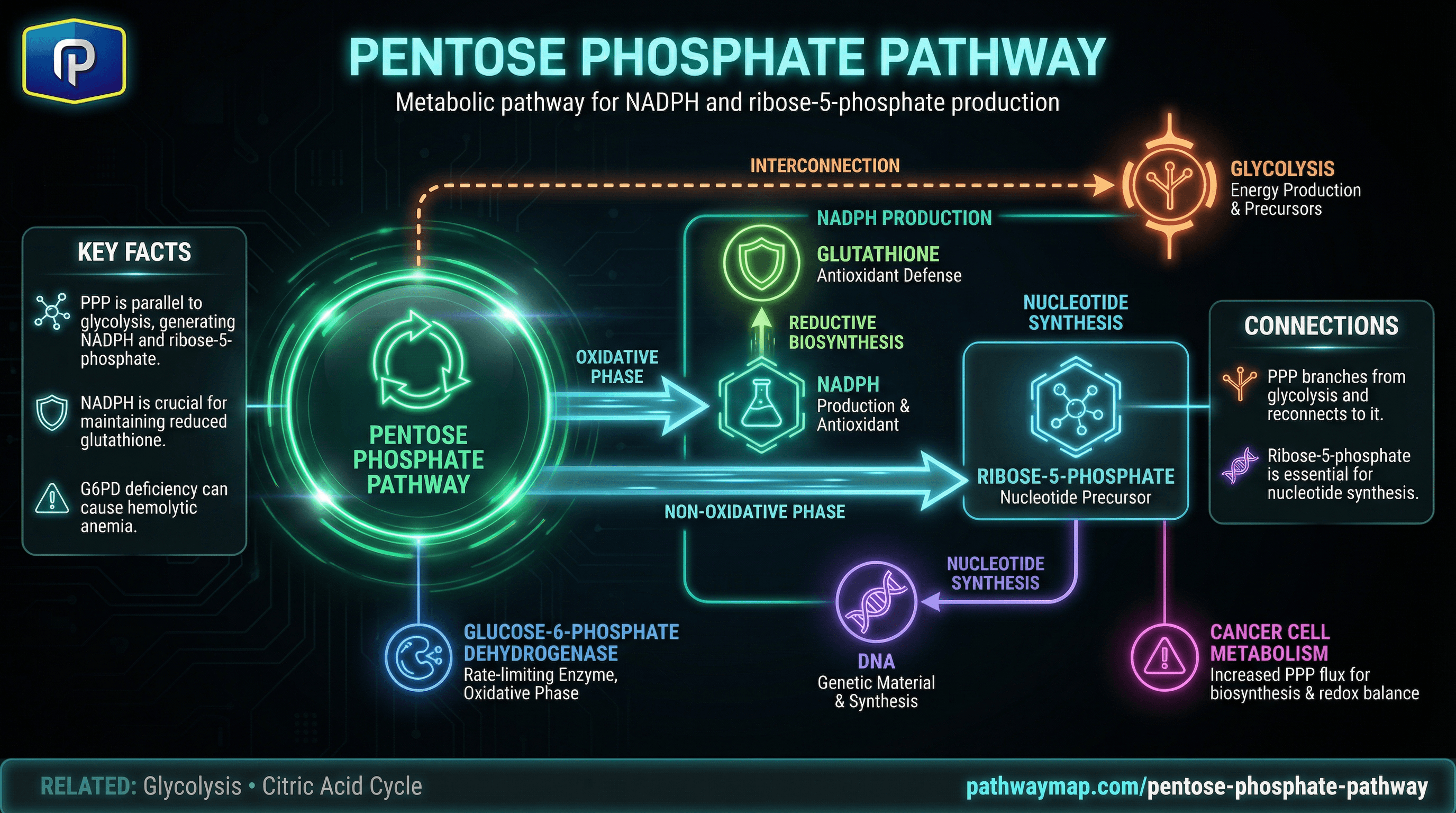
The pentose phosphate pathway (PPP, also called hexose monophosphate shunt) is a metabolic pathway parallel to glycolysis that generates: 1) NADPH for reductive biosynthesis and antioxidant defense, and 2) ribose-5-phosphate for nucleotide and nucleic acid synthesis. The oxidative phase produces NADPH and ribulose-5-phosphate.
The non-oxidative phase interconverts sugars and can connect to glycolysis. The rate-limiting enzyme is glucose-6-phosphate dehydrogenase (G6PD). G6PD deficiency is the most common enzyme deficiency worldwide, causing hemolytic anemia when exposed to oxidative stressors (fava beans, certain drugs, infections) due to inability to maintain glutathione.
Cancer cells often upregulate PPP for nucleotide synthesis and NADPH.
Metabolic Connections
Pentose Phosphate Pathway connects to 7 other pathways.
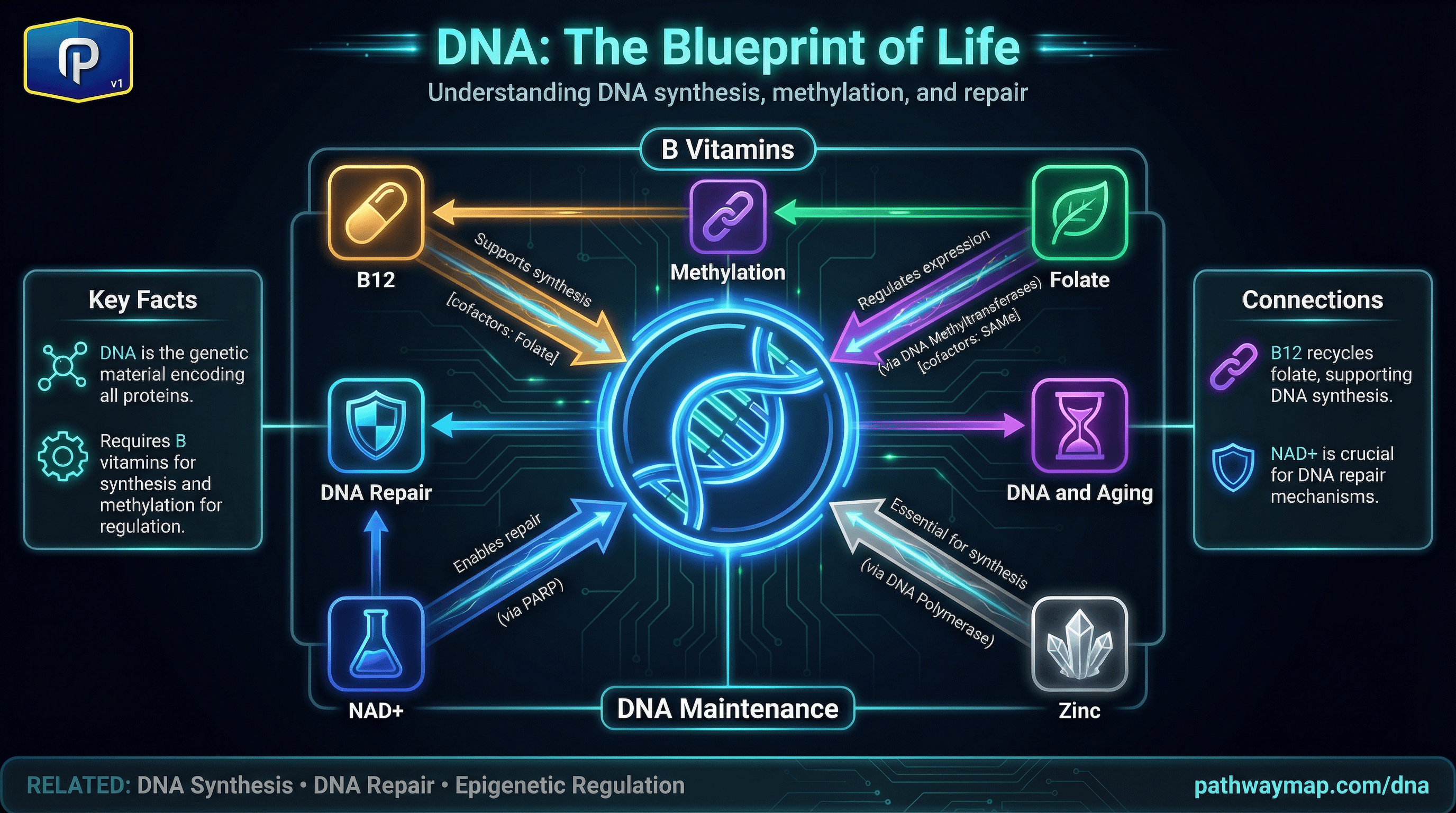
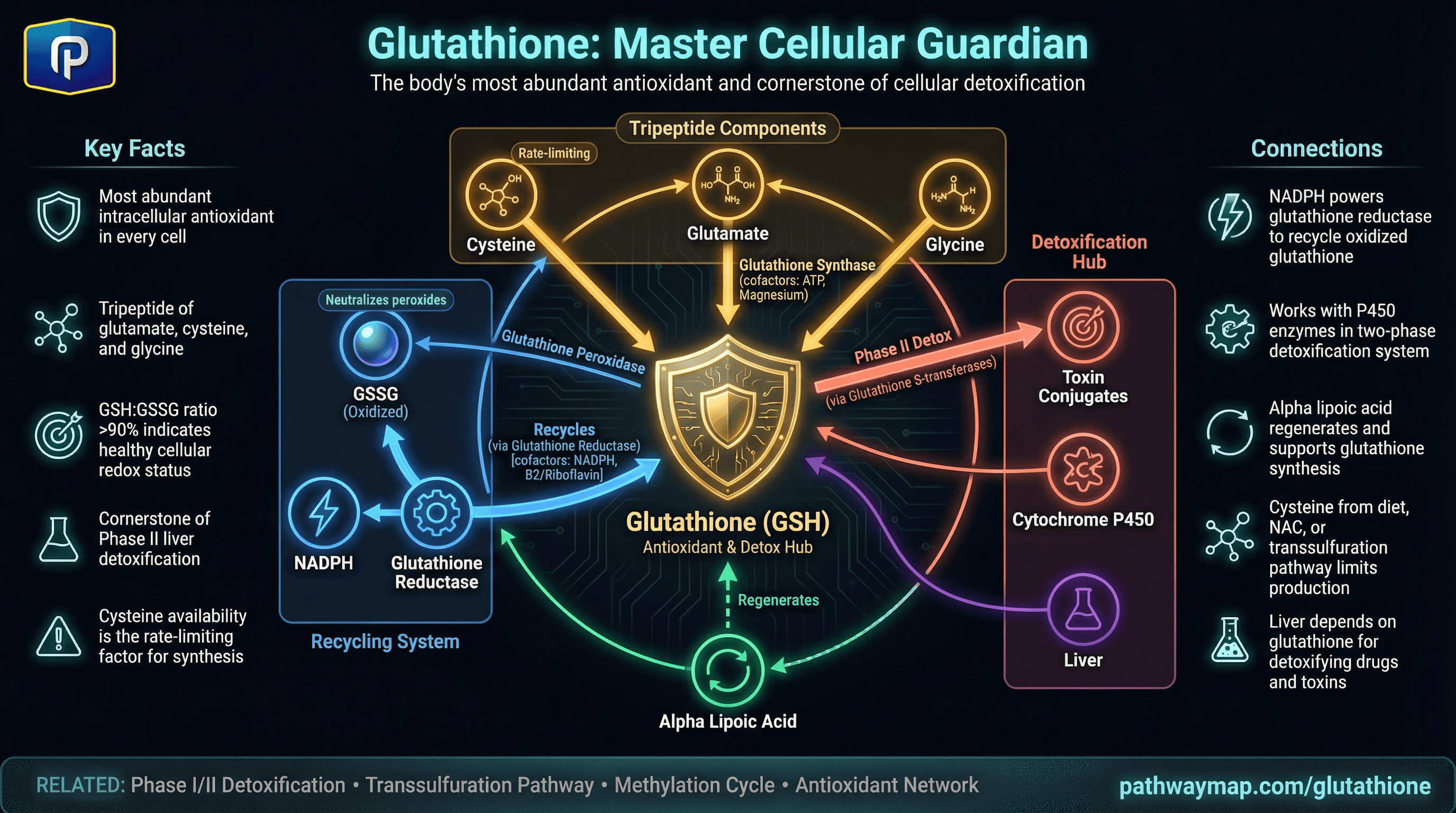

Cofactors
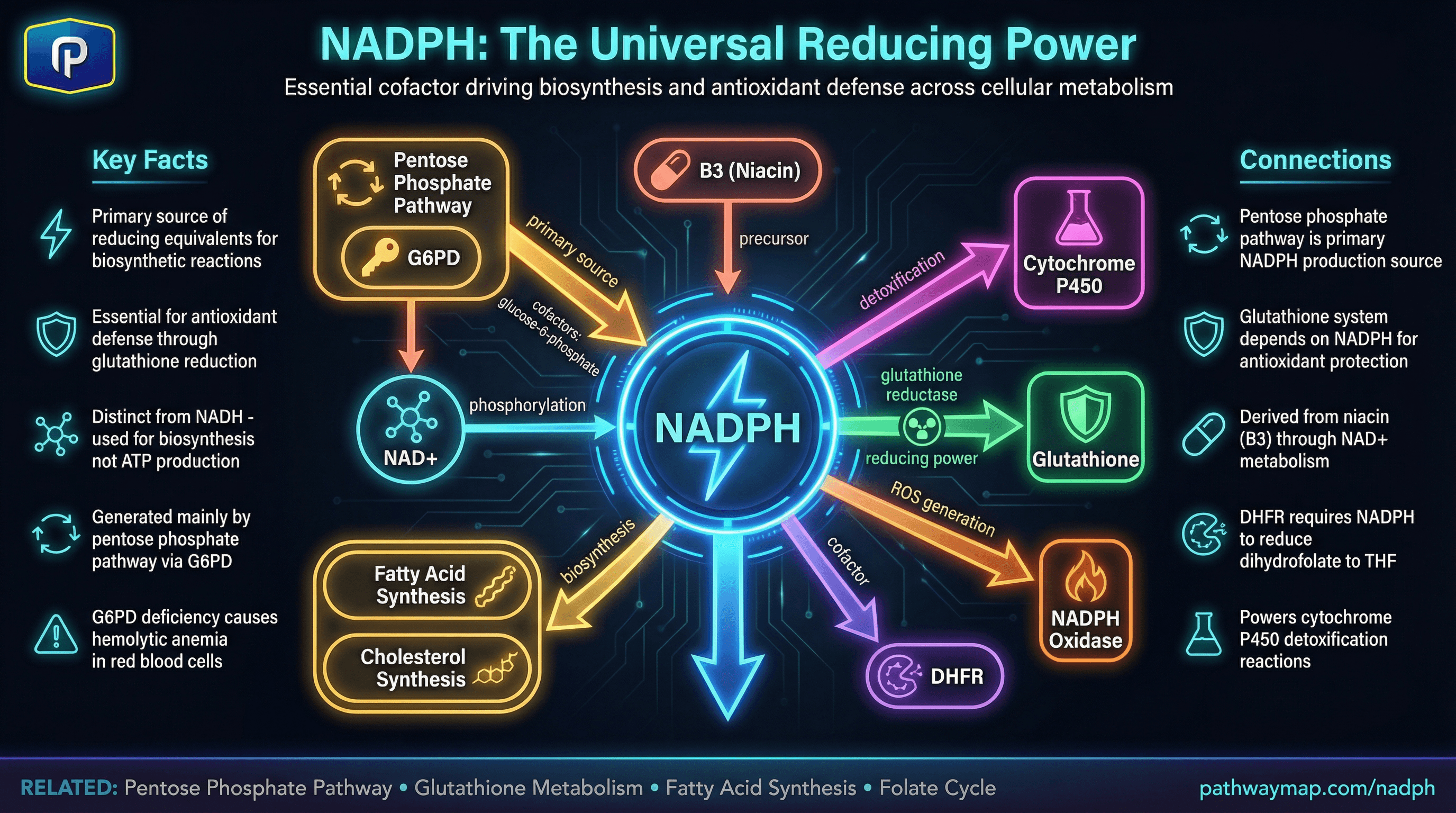
NADPH
PPP is the primary cellular source of NADPH
Reduced nicotinamide adenine dinucleotide phosphate; provides reducing power for biosynthesis and antioxidant defense.
NADPH
Pentose phosphate pathway is the primary source of NADPH
Reduced nicotinamide adenine dinucleotide phosphate; provides reducing power for biosynthesis and antioxidant defense.
Metabolites
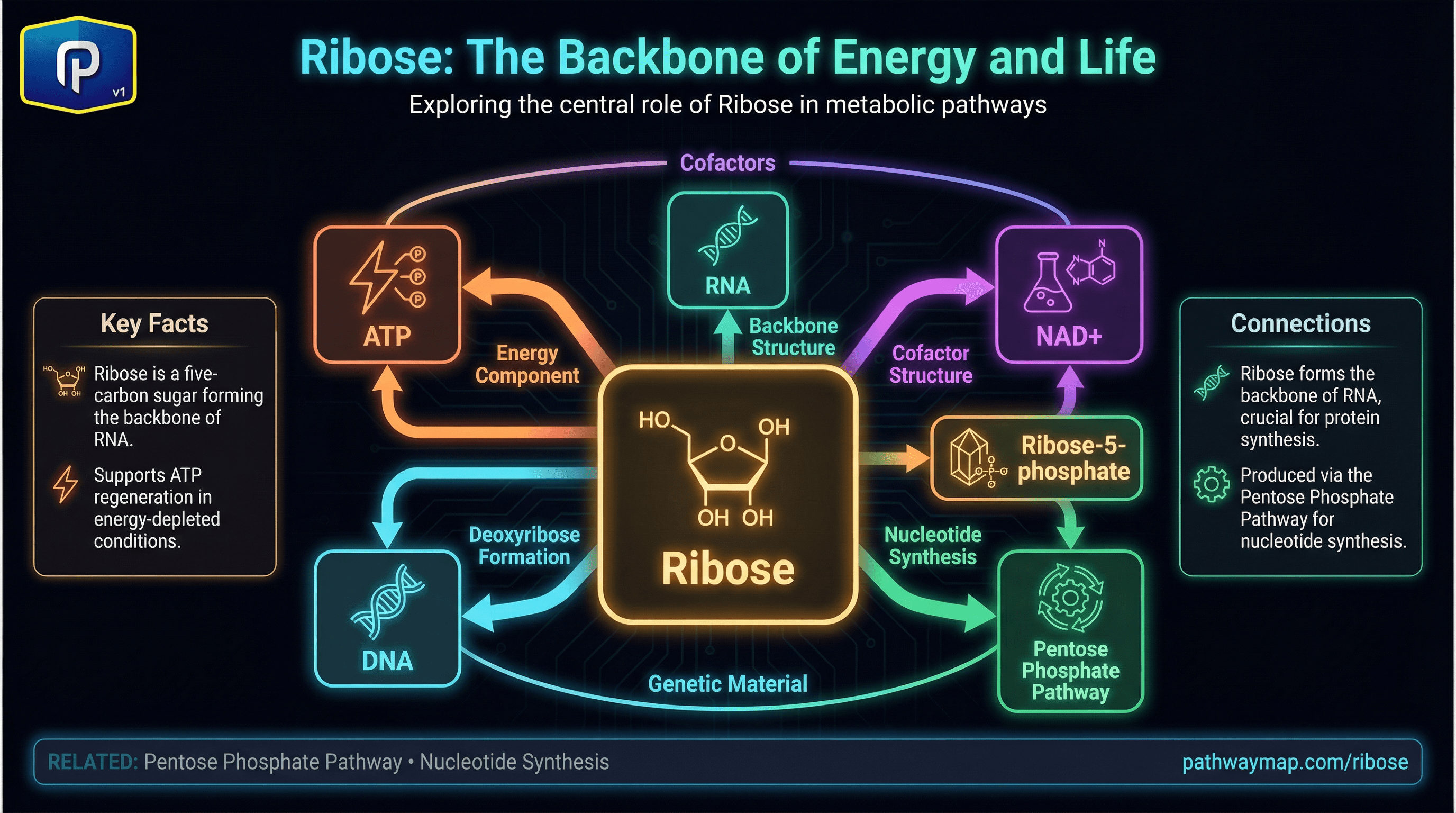
Ribose
Ribose-5-phosphate for nucleotides is produced by PPP
Five-carbon sugar; backbone of RNA and component of ATP, NAD, FAD, and CoA; supports energy recovery.
Ribose
Ribose-5-phosphate is produced by the pentose phosphate pathway
Five-carbon sugar; backbone of RNA and component of ATP, NAD, FAD, and CoA; supports energy recovery.