Pineal Gland
The "third eye." Your pineal gland is a tiny pinecone-shaped structure deep in the brain that produces melatonin. It's your body's darkness sensor, synchronizing circadian rhythms. It accumulates fluoride and can calcify, affecting sleep and hormonal balance.
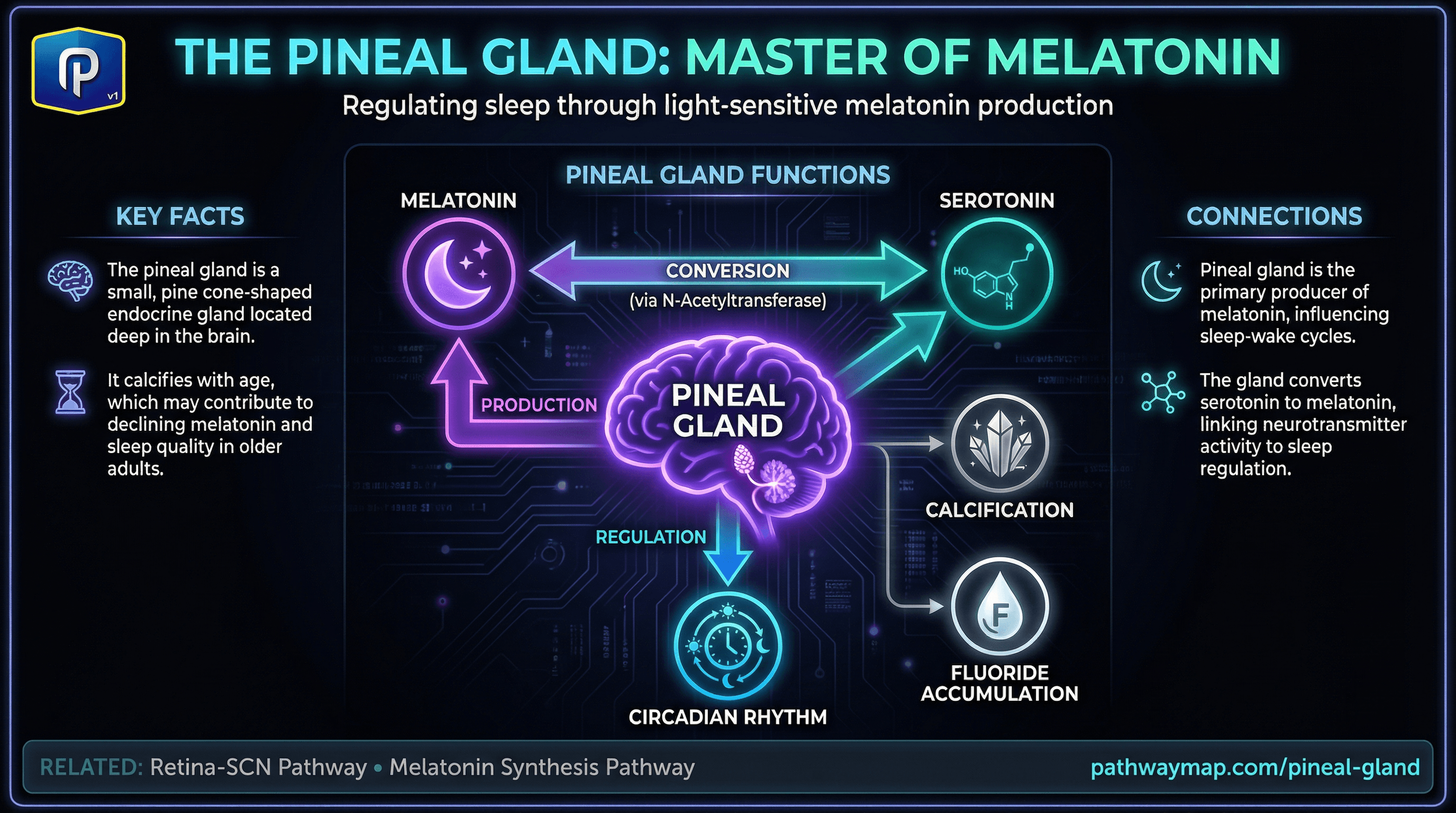
Pineal Function
Melatonin Production
Converts serotonin to melatonin at night. Light inhibits. Darkness triggers.
Circadian Regulation
Receives light signals from eyes. Sets internal clock. Coordinates hormones.
Seasonal Rhythms
Detects day length changes. Influences reproduction in animals. Mood in humans.
Pineal Problems
Calcification
Calcium deposits accumulate. Reduces function. Common with age. Fluoride accelerates.
Fluoride Accumulation
Pineal concentrates fluoride. Higher than bone. May impair melatonin production.
Light Pollution
Artificial light at night suppresses melatonin. Screens especially harmful. Blue light worst.
EMF Sensitivity
Some research suggests EMF affects melatonin. Controversial. Precautionary approach.
Aging Decline
Melatonin production drops with age. Calcification increases. Sleep problems common.
Shift Work
Disrupts natural rhythm. Pineal confusion. Increased disease risk.
Supporting Pineal Health
Darkness at Night
Sleep in complete darkness. Block all light sources. Blackout curtains.
Morning Sunlight
Bright light in morning sets clock. Suppresses melatonin. Ready for evening production.
Reduce Fluoride
Filter water. Avoid fluoridated toothpaste. Check food sources.
Blue Light Blocking
Glasses in evening. Screen filters. Dim lights after sunset.
Decalcification
Vitamin K2 may help. Iodine, boron mentioned. Limited evidence.
Melatonin Support
Tryptophan, B6, magnesium are precursors. Support natural production.