Skin Health
Your visible health indicator. The skin is the largest organ, weighing about 8 pounds and covering 20 square feet. It's a barrier against pathogens, regulates temperature, synthesizes vitamin D, and houses immune cells. Skin problems often reflect internal imbalances—the gut-skin axis is real.
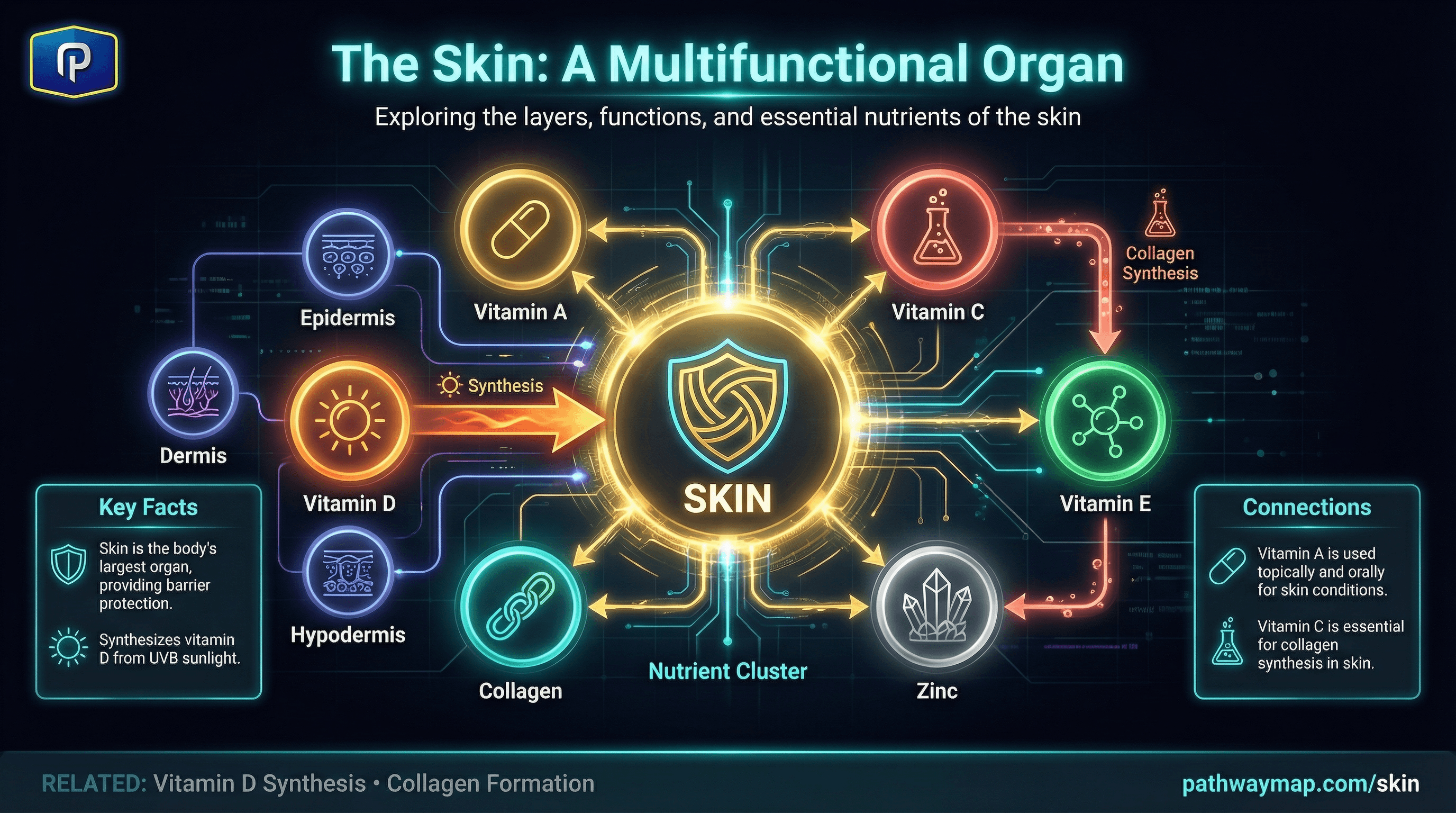
What Skin Does
Barrier Protection
Keeps pathogens out, moisture in. Acid mantle discourages bacteria. First line of defense.
Vitamin D Synthesis
UVB converts cholesterol to vitamin D3. Best source when done safely. Varies by skin tone.
Temperature Regulation
Sweating cools. Vasoconstriction conserves heat. Essential for thermoregulation.
Immune Surveillance
Langerhans cells detect pathogens. Trigger immune response. Skin is immune organ.
Sensation
Touch, pressure, pain, temperature receptors. Millions of nerve endings. Vital feedback.
Excretion
Sweat removes some toxins, salts, urea. Minor detox pathway but still relevant.
The Gut-Skin Axis
What happens in the gut shows on the skin. This connection explains many skin conditions:
Common Skin Conditions
Acne
Hormones (androgens), bacteria, sebum, inflammation. Gut dysbiosis often involved.
Eczema
Barrier dysfunction + immune dysregulation. Food sensitivities, histamine, stress triggers.
Psoriasis
Autoimmune. Rapid skin cell turnover. Gut-immune connection. Systemic inflammation.
Rosacea
Facial redness, blood vessels. SIBO connection. Demodex mites. Triggers vary.
Hives
Histamine release → welts. Allergies, mast cell activation, stress, infections.
Aging
Collagen decline, oxidative damage, glycation. Sun exposure major factor.